

Curious about homeschooling? Learn how it works, its benefits and challenges, costs, and how to decide if learning at home is right for your family.
Fractions are part of everyday life, even if we don’t always stop to think about them. At home, you might use fractions when slicing a pizza or measure ingredients for a recipe.
Children come across fractions in everyday situations more often than they realize, which is why understanding them is so important. If you’re supporting your child as they learn math, fractions are a topic you’ll likely come across sooner or later.
They can seem confusing at first, but understanding fractions helps kids make sense of the relationships between numbers.
To help you get started, we’ve put together this article that covers the basics of fractions and ways to support kids in their learning journey.
A fraction is a number that represents a part of a whole or a part of a group. We use fractions when something is divided into equal parts and we want to describe how many of those parts we have.
One simple way to explain fractions to children is: “A fraction shows how many equal parts of something you have.”
For example, if a sandwich is cut into four equal pieces and your child eats one piece, they have eaten 1/4 of the sandwich.
Fractions consist of two numbers:
Take the fraction 3/5 as an example:
The more children look for fractions in real-life situations, the more they recognize how common and useful fractions really are. Here are more examples:
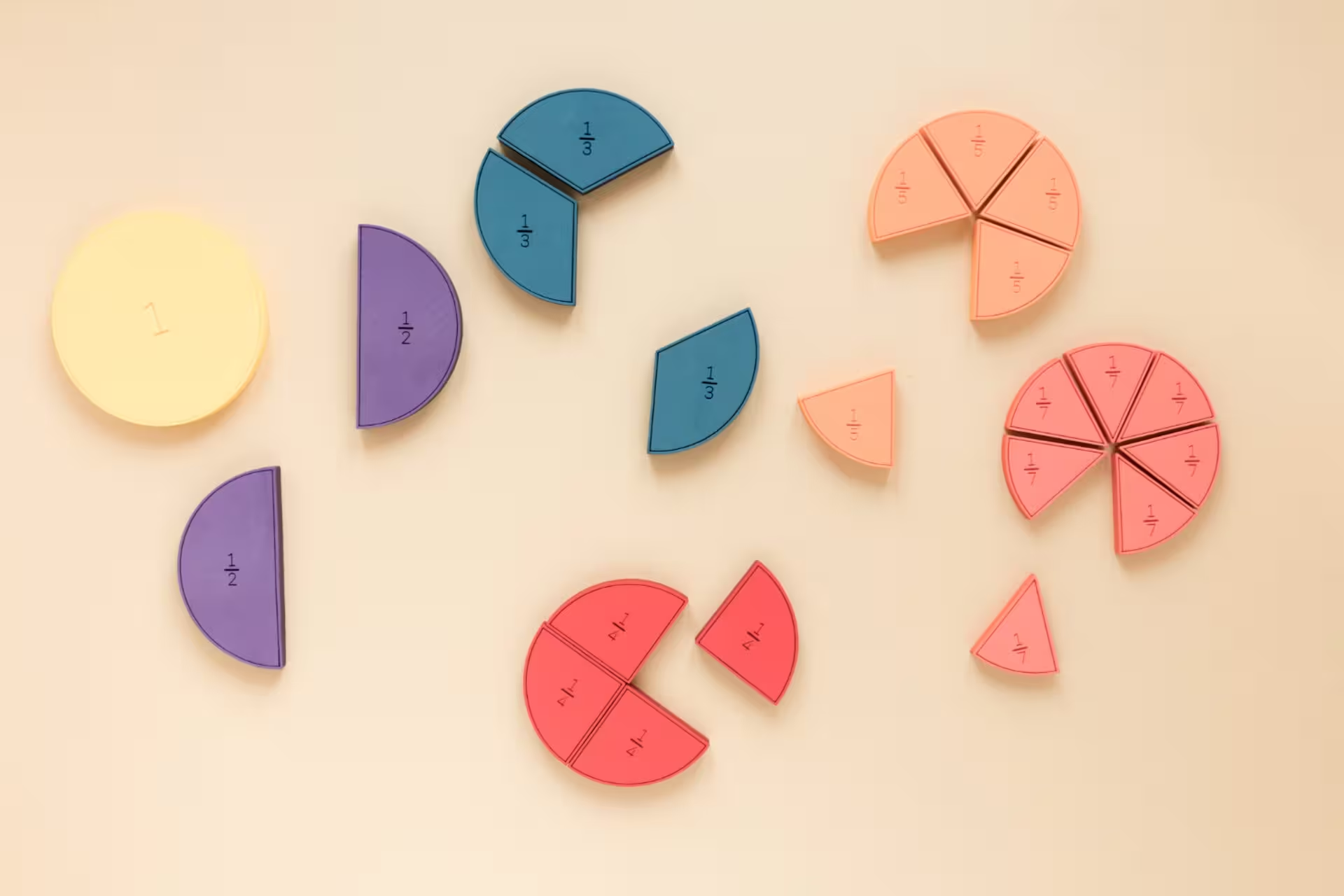
Children can understand fractions more easily when they’re able to see or touch the objects being divided. Parents may use food, toys, or drawings to make the concept more concrete.
Fractions can be grouped into different categories based on the relationship between the numerator (the top number) and the denominator (the bottom number).
With these main types of fractions in mind, kids will then be able to develop a stronger foundation for topics they will encounter later — such as decimals and percentages.
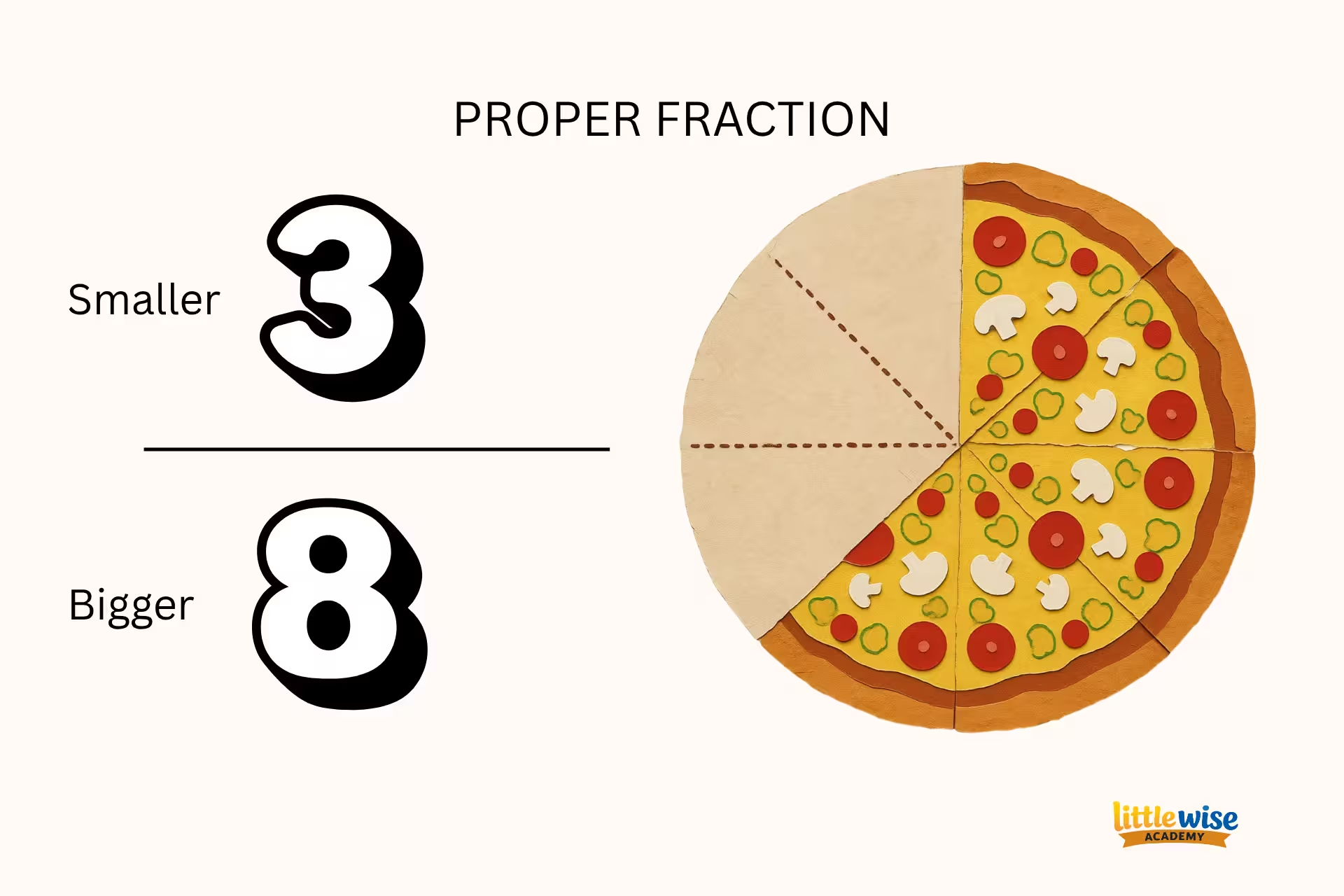
A proper fraction is a fraction where the numerator is smaller than the denominator. This means the fraction represents a value that is less than one whole.
Examples of proper fractions include 1/4, 2/5, and 7/8.
Children are usually introduced to proper fractions first because they are easy to visualize. For example, if a pizza is divided into 8 equal slices and a child eats 3 slices, they have eaten 3/8 of the pizza.
A unit fraction is a special type of proper fraction where the numerator is 1.
Examples include 1/2, 1/3, 1/4, and 1/10.
Unit fractions represent a single equal part of a whole. They are used when children first learn fractions because they clearly show how one object can be divided into equal pieces. For example, 1/4 means one of four equal parts.
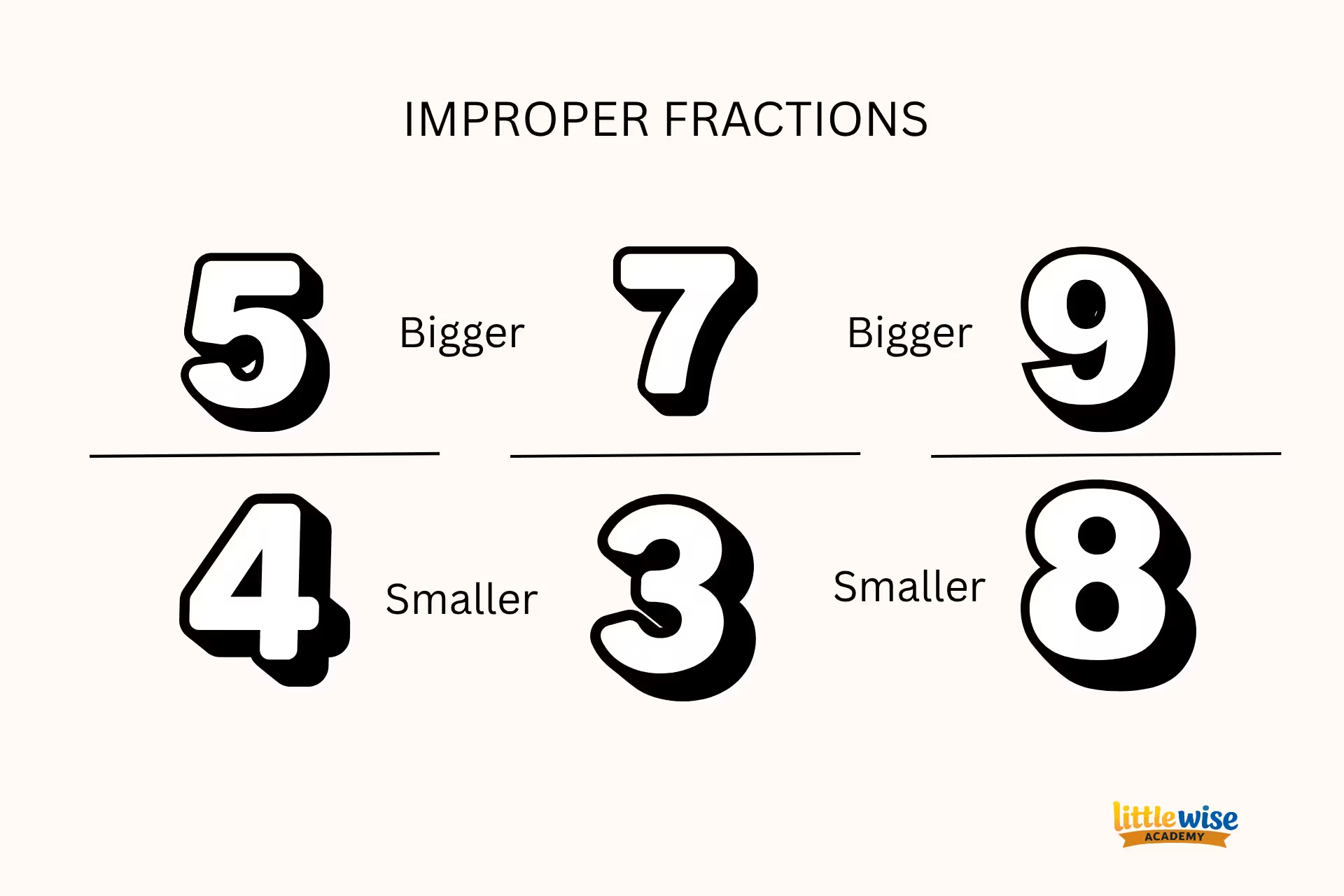
An improper fraction is a fraction where the numerator is equal to or greater than the denominator. This means the fraction represents one whole or more than one whole.
Examples of improper fractions include 5/4, 7/3, and 9/8.
For instance, 5/4 means five one-fourths. Since four fourths make one whole, 5/4 is equal to one whole and one extra fourth.
Kids may initially find improper fractions confusing because the top number is larger than the bottom number.
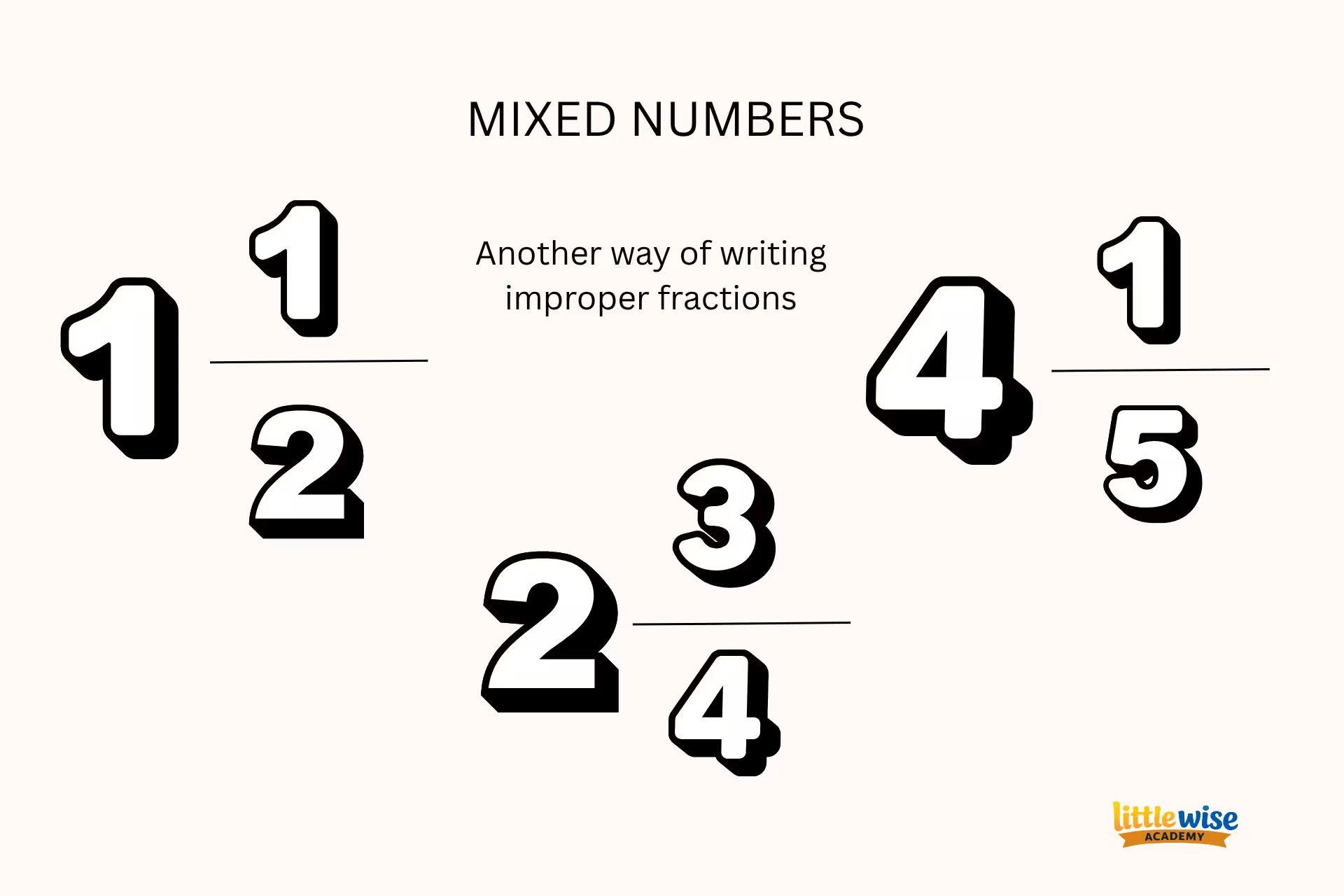
A mixed number (sometimes called a mixed fraction) combines a whole number and a proper fraction.
Examples include 1 ½ , 2 ¾ , and 4 ⅕ .
Mixed numbers are another way of writing improper fractions. For example, 1 ½ means one whole and one-half, while 3 1/4 means three wholes and one-quarter.
Many children find mixed numbers easier to understand because they show the whole number separately from the fractional part.
While proper fractions, improper fractions, and mixed numbers are classified based on the size of the numerator and denominator, some fractions are grouped according to how they relate to one another.
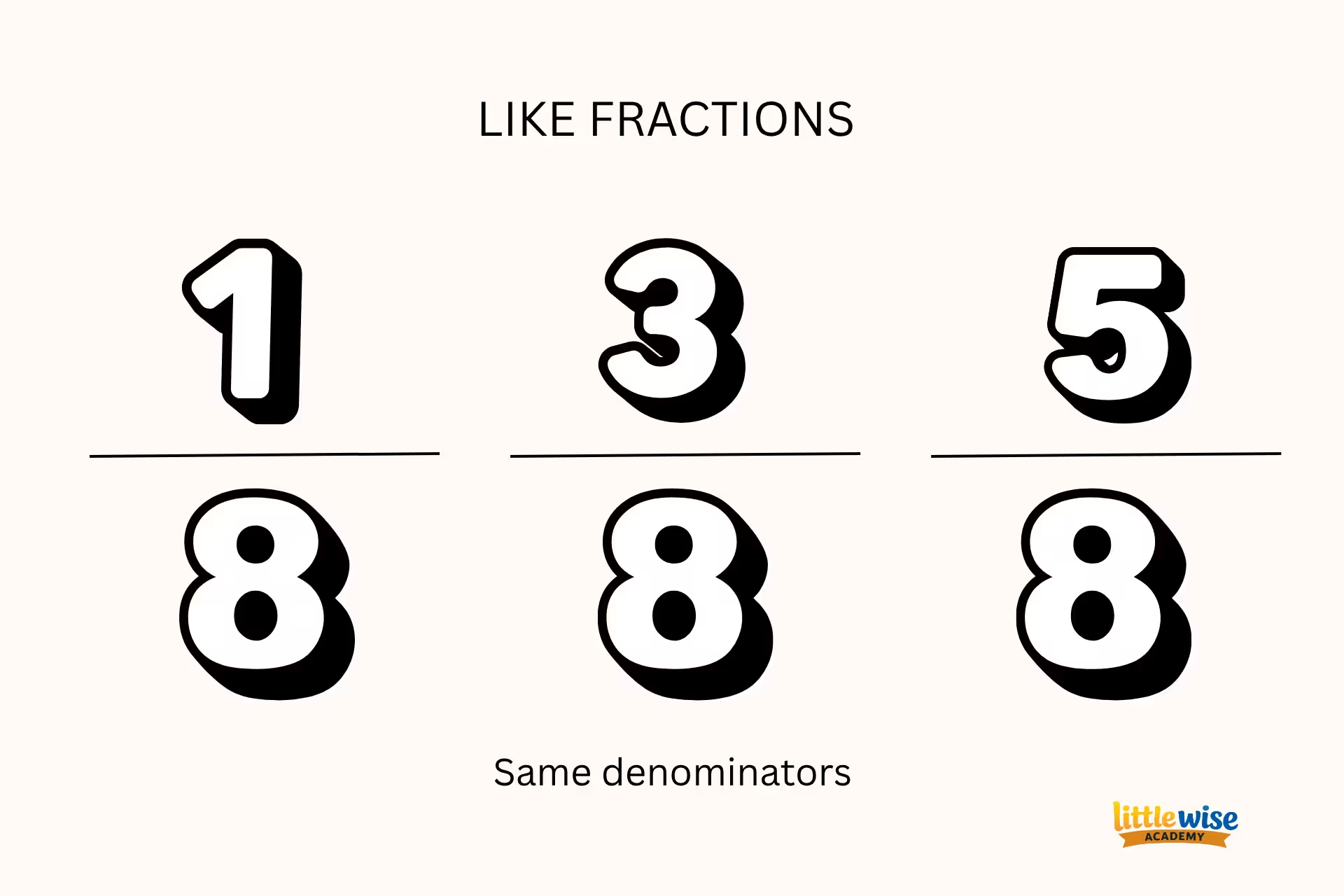
Like fractions are fractions that have the same denominator. In other words, the whole has been divided into the same number of equal parts.
Examples of like fractions include 1/8, 3/8, and 5/8.
Because the denominators are the same, children can easily compare the fractions by looking at the numerators. For example, 5/8 is greater than 3/8 because five parts are more than three parts when the size of the parts is the same.
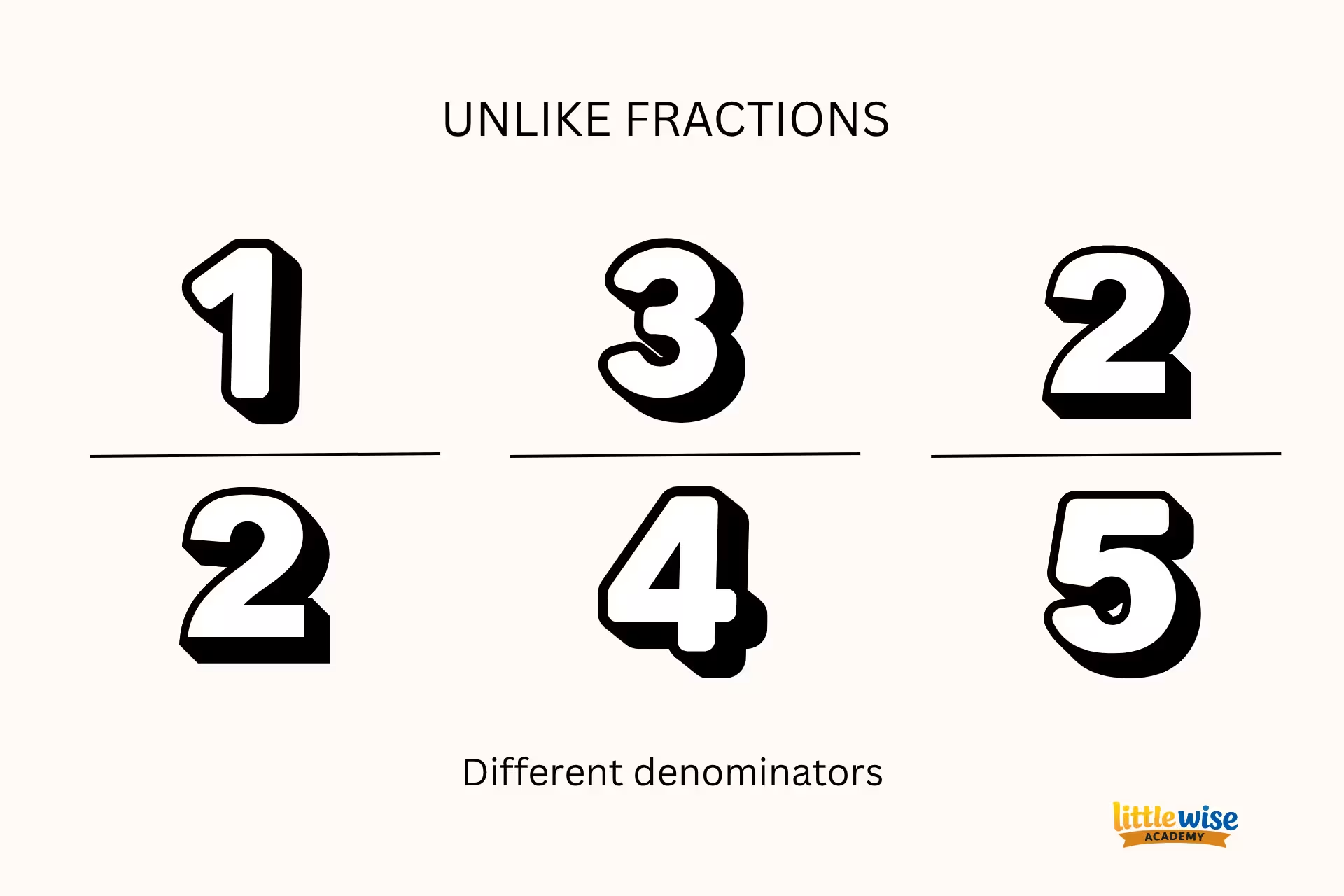
Unlike fractions are fractions that have different denominators. This means the wholes have been divided into different numbers of equal parts.
Examples of unlike fractions include 1/2, 3/4, and 2/5.
Since the parts are different sizes, unlike fractions cannot always be compared by simply looking at the numerators. For example, 1/2 and 1/4 both have a numerator of 1, but they do not represent the same amount.
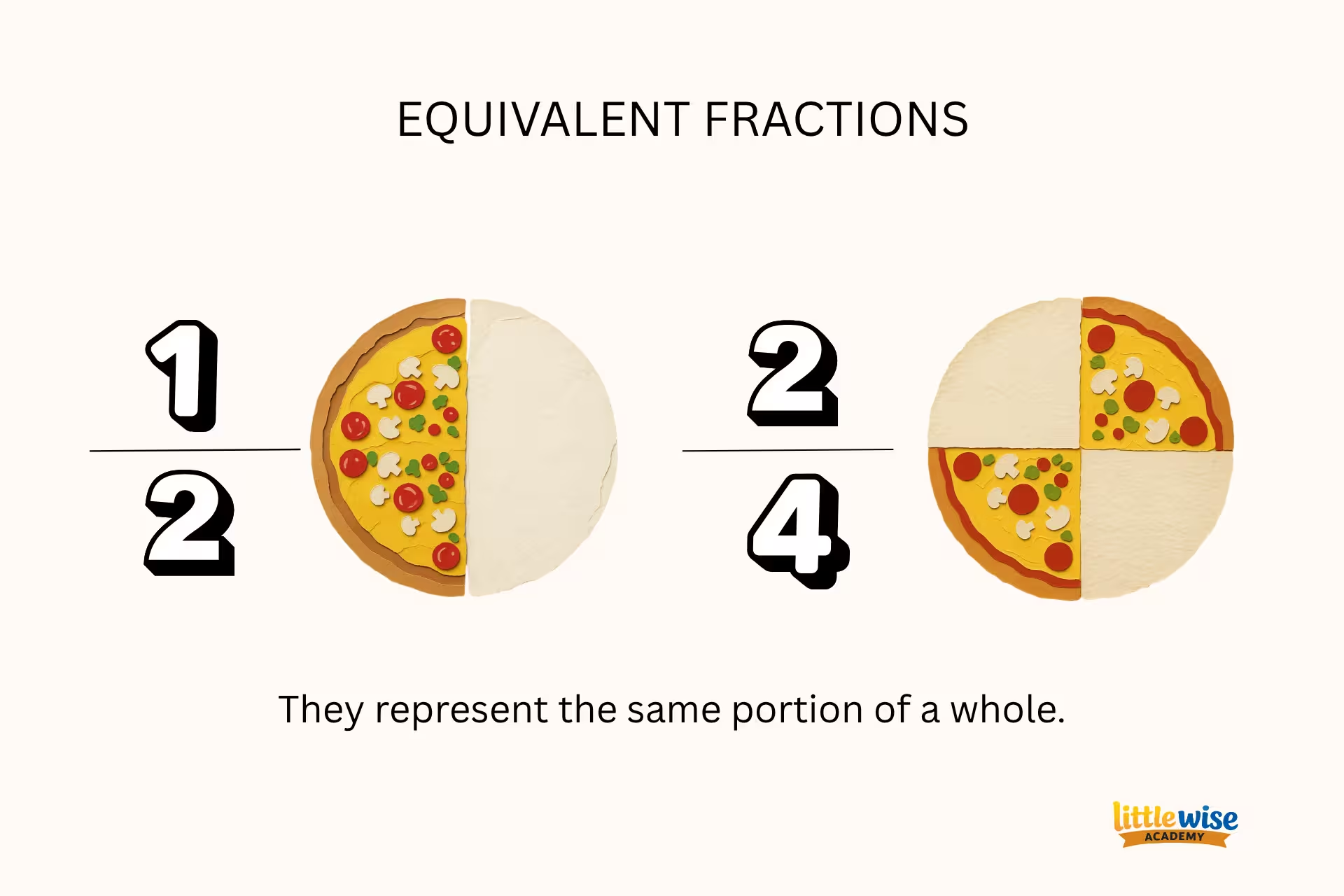
Equivalent fractions are fractions that look different but represent the same value.
Examples include:
1/2 = 2/4
2/3 = 4/6
3/5 = 6/10
Although the numerators and denominators are different, the fractions represent the same portion of a whole. These fractions help kids learn that fractions can still be written in different ways while representing the same amount.
For example, half of a pizza is still half of a pizza whether it is cut into 2 slices, 4 slices, or 8 slices.
Many children find fractions challenging, and it’s not simply because fractions are “hard.” In many cases, children struggle because they don’t fully understand what fractions represent in the first place.
A common reason is that fractions are introduced as numbers on a page rather than as parts of real objects and experiences. If a child memorizes that 1/2 is a fraction but never connects it to sharing a sandwich or dividing a group of toys, the concept can feel abstract.
Another factor is that children may need stronger foundational math skills. Fractions build on concepts such as counting, number sense, multiplication, division, and understanding equal groups.
Children may also struggle because fractions don’t always behave the way they expect numbers to behave. For example, with whole numbers, a larger number usually means a larger value. However, with fractions, 1/8 is actually smaller than 1/4, even though 8 is larger than 4.
Finally, children will need repeated exposure to fractions. A single lesson is rarely enough.
If your child is struggling with fractions, it may help to focus less on memorizing rules and more on helping them see what fractions actually represent. The following strategies can help:
Area models use shapes to show fractions visually. A shape, such as a rectangle or circle, is divided into equal parts, and some of those parts are shaded to represent a fraction.
For example, if a rectangle is divided into four equal sections and two sections are shaded, the model represents 2/4.
Another effective way to teach fractions is by using groups of everyday objects such as blocks, buttons, toy cars, crayons, or pieces of fruit.
For example, if there are 12 crayons and 3 are blue, children can identify that 3/12 of the crayons are blue. If 6 out of 12 crayons are red, they can see that 6/12 represents a larger portion of the group.
A number line helps children see where fractions belong in relation to whole numbers. They can learn that fractions are numbers with a specific position on a line.
For example, 1/2 is located halfway between 0 and 1, while 3/4 is closer to 1 because it represents a larger amount.
Whether fractions are being taught at home or in the classroom, we can help them feel more at ease with the concept. Children learn fractions best when they are given plenty of opportunities to explore them. Consider these tips:
Also, remember that mistakes are a normal part of learning fractions. Some children may need repeated exposure. When mistakes happen, encourage your child to explain their thinking. Work through the problem together.
Fractions may seem like a small part of math, but they introduce children to wholes, parts, comparison, and number relationships.
Concepts such as proper fractions, improper fractions, mixed numbers, and fraction relationships can feel confusing for beginners. Fortunately, we can take advantage of visual models — and most importantly, regular practice.
Try to keep fraction activities free from unnecessary pressure. Your child benefits from every positive learning experience!
Curious about homeschooling? Learn how it works, its benefits and challenges, costs, and how to decide if learning at home is right for your family.
Help kids understand verbs with simple explanations and fun examples they’ll remember.

Want to help your child enjoy reading more? Try these easy ways to make story time more interactive, creative, and lovable.
Help kids master capitalization with the M.I.N.T.S. rule, and other essential capitalization rules.
Help your child master nouns with easy explanations of common, proper, concrete, abstract, and other types of nouns, plus everyday examples.