
Turn family movie night into a learning experience with these 8 math movies for kids.

Reading is a step‑by‑step process that starts with listening to sounds and matching those sounds to letters. An important milestone for kids is learning consonant blends — combinations like “fr,” “pl,” or “nd” that appear in many everyday words.
Teaching blends helps children read with fewer stops and starts and spell with greater accuracy. This is especially important since their fluency can affect their comprehension across subjects.
The good news is that you don’t need to teach blends through memorization alone. This article will cover what consonant blends are, including helpful word lists and strategies.
Consonant blends are groups of two or three consonants where each letter keeps its own sound. When blended, the sounds are pronounced quickly one after another.
In a consonant blend, children usually see 2–3 letters, and when they say the word, they can still hear each sound from those letters.
For example, a blend like “fl” has two letters and two sounds (/f/ and /l/), while a blend like “str” has three letters and three sounds (/s/, /t/, /r/), all spoken in quick succession.
These blends are commonly found at the beginning of words (initial blends) and at the end of words (final blends), which helps children decode both the start and ending parts of many everyday words.
For example, in the word “flag,” you can still hear the /f/ and /l/ sounds at the beginning. Other examples include:
Each sound is heard, just spoken quickly.
This is a common point of confusion for learners, especially when they are first learning how letters work together to form words. Both blends and digraphs involve two letters placed side by side, but they behave very differently when spoken.
Blends: Each letter keeps its own sound, and you can still hear them individually when you say the word slowly. The sounds are just pushed together.
In blends, readers “slide” the sounds together while still noticing each one.
Digraphs: Two letters work together to make a single new sound. You cannot separate the sounds because they merge into one unit.
Here’s a simple way to remember the difference:
Initial consonant blends are letter pairs (or trios) at the start of words that each keep their own sound. Think bl in blue, gr in green, sp in spoon, or tr in tree.
Because these patterns appear in many everyday words, once children know them, they can spot the start of a word faster and sound out new words with minimal guessing.
Final consonant blends are the consonant groups you hear at the ends of words — like the -nd in hand or the -mp in jump. Kids need to say each sound clearly so they don’t drop letters when reading or writing.
Two-letter consonant blends are very common in English. Below are some examples you can introduce to your child or students. Feel free to use these words during reading practice, spelling activities, or simple word games.
L-blends include blends that end with the letter l. These blends appear in everyday objects, colors, and actions:
R-blends include blends that end with the letter r. They are especially common in action words:
S-blends start with the letter s followed by another consonant. They are usually found in school-related and activity words:
T-blends usually involve the letter t paired with another consonant:
W-blends include words where the letter w works with another consonant:
Below are common final blend patterns:
-nd: hand, sand, find, kind, pond
-mp: jump, lamp, camp, stamp, bump
-st: best, nest, fast, last, test
-ld: cold, gold, held, wild, build
-lk: milk, silk, talk, walk, chalk
-sk: mask, desk, task, risk, ask
-ft: gift, lift, left, drift, soft
-pt: kept, slept, swept, crept, wept
Three-letter blends typically follow competence with two-letter blends because they require finer phonemic sequencing. It helps to introduce them gradually and provide repeated practice.
Common three-letter blends include:
This blend is especially helpful for kids because it often appears in high-frequency, visual words. For example, children may already know words like square, squeeze, or squirrel, which they can easily picture in their minds while reading.
Children develop this skill best when they hear the sounds, practice reading them in context, and encounter them regularly through activities. Below are research-informed strategies that can help:
Introducing too many blends at once can overwhelm beginning readers. Instead, focus on one blend pattern, such as bl or st, until children become familiar with it.
Once they can read and spell several words with that pattern, gradually introduce a new blend. Reember to review previously learned ones.
Before asking children to read words, model how the individual sounds come together. For example, say /b/ and /l/ separately before blending them into “bl.” Then apply the blend to words like blue, block, and blank.
Group words that share the same blend so children can recognize patterns more easily. For example, after introducing gr, practice reading words like green, grow, grape, grab, and grass together.
Repeatedly seeing and reading similar words helps children identify the blend more quickly when they come across unfamiliar words.
Read books that naturally feature consonant blends to give children repeated practice in context. As you read together, ask your child or students to find blend words, read them aloud, or point to the blend before saying the whole word.
Some books that work well for practicing consonant blends include:
You can also use decodable readers that focus on specific blend patterns, such as bl, st, or gr, to give children targeted practice.
Invite children to search for blend words in storybooks, magazines, classroom posters, or around the house. They can highlight the blend, write the word in a notebook, or sort it into categories.
Reading and writing reinforce each other. Encourage children to spell blend words, complete simple sentences, or write short stories using several words with the same blend.
Most children are ready to learn consonant blends after they have mastered letter sounds and can comfortably read simple CVC (consonant-vowel-consonant) words such as cat, dog, and sun.
This happens in kindergarten or 1st grade, with more complex blends introduced and reinforced throughout 2nd grade. However, children learn at different rates, so it’s more important to look at their reading skills than their age or grade level.
Short, consistent practice is much more effective than occasional long lessons. Aim for 10 to 15 minutes of blend practice most days of the week.
Above all, be patient and celebrate steady progress. Some children recognize blends quickly, while others need repeated exposure before the patterns become automatic.
Regular practice, encouragement, and plenty of opportunities to use blends in everyday reading and writing will help.
We hope you’ve taken away something valuable to help your child get started with learning consonant blends. Like any new reading skill, mastering blends takes time and regular practice.
There’s no need to rush the process. The last thing we want is for children to feel discouraged. Instead, introduce one blend at a time, celebrate small successes, and keep practice encouraging!
Turn family movie night into a learning experience with these 8 math movies for kids.

Make math exciting with board games that teach math through play! This list of top picks includes fun, age-appropriate options for kids 3 and up.

Discover 30 best math books for kids ages 2-12. Find books about counting, shapes, operations, patterns, logic, and more.

Learn what math anxiety is, how to spot the signs, and ways to help your child feel more confident with math.
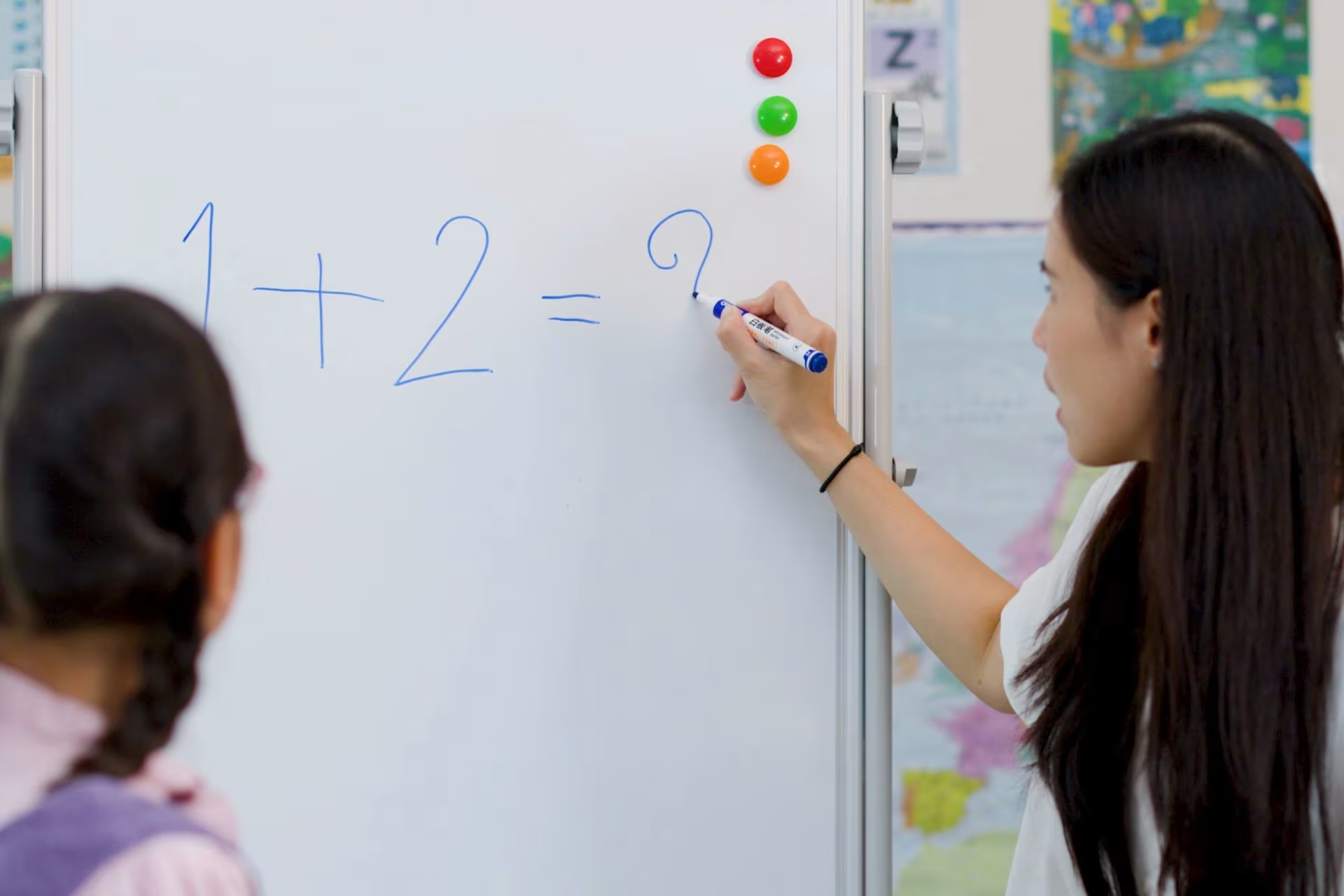
Addition and subtraction build the foundation for future math success. Learn when kids develop these skills and get fun, everyday practice ideas.