

Curious about homeschooling? Learn how it works, its benefits and challenges, costs, and how to decide if learning at home is right for your family.
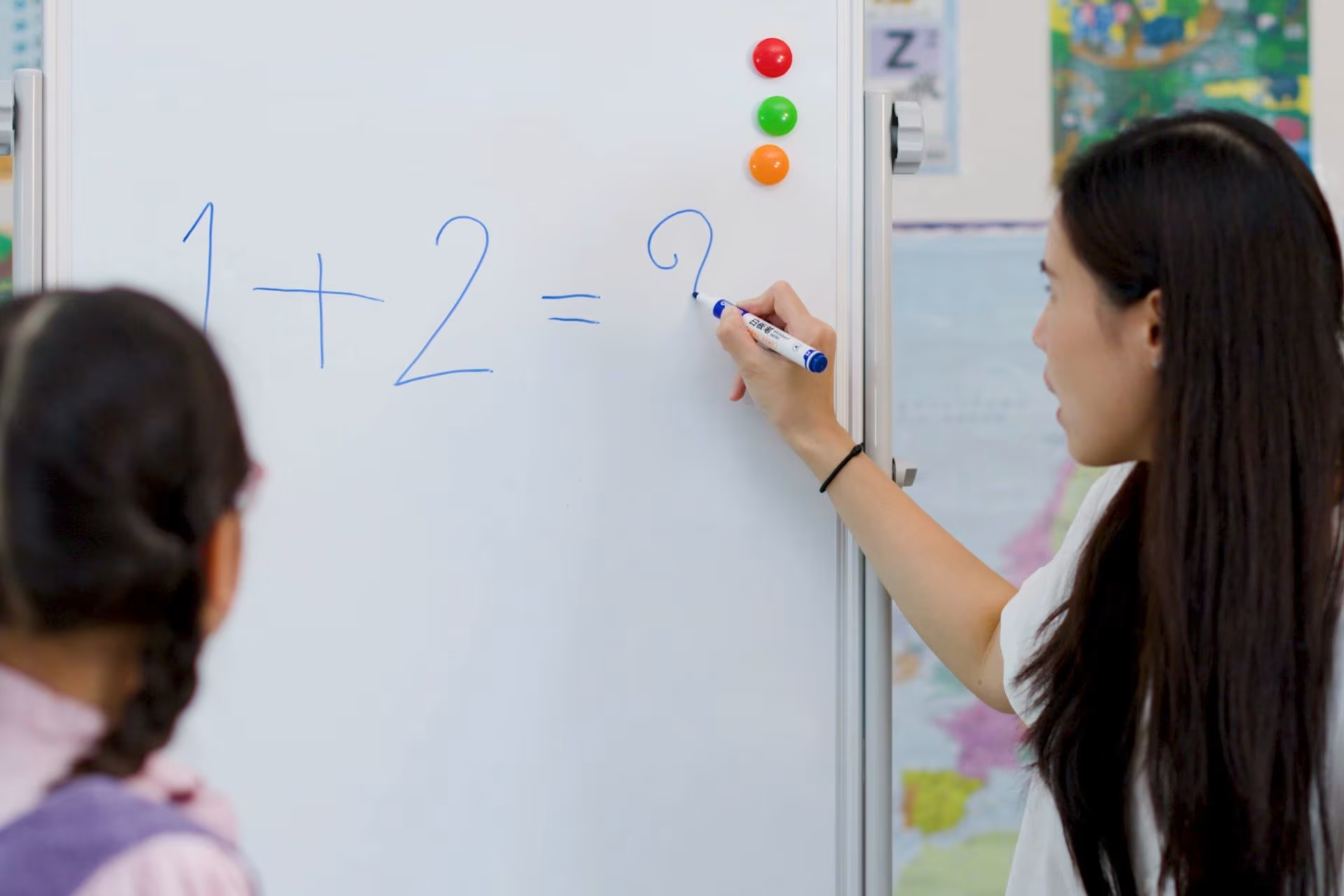
After children learn to count, the next exciting step in their math journey is discovering how numbers work together. That’s where addition and subtraction come in. These two operations are usually your child’s first introduction to actual math problem-solving.
Even before kids write math problems, they use addition and subtraction in real life, like when they give away toys or count puzzle pieces. This article will explain when kids pick up these skills and how to support them.
Learning how to add and subtract happens in steps. Let’s look at what kids learn in each grade:
In preschool, math learning is all about play and exploration. Children begin to understand numbers by hearing them in everyday life, like counting the toys they have or the blocks they stacked.
They aren’t doing formal addition or subtraction yet, but they start to notice when more items are added or taken away. Preschoolers also begin simple counting up to 10 or 20.
In kindergarten, kids start to build real math skills using numbers. They practice counting both forward and backward, starting and ending with zero. This helps them understand how numbers are ordered and how they relate to one another.
They also begin joining small numbers together, like 2 + 3, and breaking them apart. Comparing groups of objects becomes part of the learning too, as they start noticing how much more or less one group has compared to another.
In first grade, kids become more confident with numbers and start working with bigger ones. They learn to add single-digit numbers to double-digit numbers, like 23 + 6. They also practice subtracting single-digit numbers and groups of ten from larger numbers—for example, 40 – 10 or 15 – 3.
At this stage, students begin to solve simple word problems and use different strategies, like counting on or using a number line, to find the answers.
In second grade, kids begin solving more challenging addition and subtraction problems. This means they’re working with larger numbers—sometimes in the hundreds—and learning to solve problems that require more steps.
One key skill they learn is regrouping (sometimes called “borrowing” or “carrying”). This happens when a number is too big or too small to subtract or add easily. For example, in the problem 52 + 39, students learn to carry over when the digits in the ones place add up to more than 10.
By fourth grade, most kids can add and subtract large numbers on their own, without needing visual tools like counters, base-ten blocks, or number lines. They’ve practiced regrouping enough that they can carry and borrow in multi-digit problems.
Instead of using drawings or hands-on objects to figure things out, they now rely on mental math and written strategies. This lets them to apply their skills to real-world math, like working with time, money, and measurements.
Not all kids learn math the same way. It’s normal for some to have a harder time with addition and subtraction. One common reason is a weak understanding of basic math concepts and number sense.
Before kids can solve problems, they need to grasp ideas like more vs. less, part vs. whole, and the order of numbers.
These early building blocks, known as number sense, help children understand how numbers work together and why we add or subtract in the first place. When number sense isn’t strong, even simple math problems can feel confusing.
Some children also struggle because they have trouble remembering math facts, like knowing right away that 5 + 4 = 9. Others may face learning challenges such as dyscalculia, a math-related learning disability that makes it hard to understand numbers.
Math anxiety is another factor. It can cause kids to feel nervous or frustrated when it’s time to do math, which makes learning even more difficult.
Identifying what’s behind the struggle is the first step toward helping kids feel more confident with numbers. The next step is giving them fun, low-pressure ways to practice at home.
Here are some effective ways to support learning addition and subtraction:
Look for moments where your child can count, add, or subtract in real situations.
For example, at snack time, you can ask, “You have 5 grapes. If you eat 2, how many are left?” Or while setting the table, say, “We need 4 forks. We already have 2. How many more do we need?”
You can also involve your child in cooking and baking, which are full of opportunities for real-life math. Ask your child to help measure ingredients, count items, or double a recipe.
For example, say, “The recipe needs 1 cup of flour, but we’re making a double batch. How many cups do we need?” or “We’ve already added 1 egg—how many more do we need to make 3?”
Model your thinking by talking through simple problems as you go. For instance, “We had 12 eggs, and I used 3 for breakfast. That means we have 9 left.”
Games are a great way to build math skills without pressure. They turn learning into something fun your child can look forward to. Here are some screen-free games to try:
Reading isn’t just for language skills. It can also boost math understanding. Math-themed books make addition and subtraction feel relatable and less intimidating. They show kids how numbers work through characters, or everyday problems they can connect with.
To make the most of math reading time, look for books that encourage your child to think and solve problems as they go. Remember to pick stories that match your child’s age and level. Look for those with colorful illustrations and real-life situations.
Some kids understand math better when they can see it and touch it. Using objects like counting bears, blocks, Legos, coins, or even snacks helps kids make sense of adding and taking away.
For example, show 6 blocks, remove 2, and let your child count what’s left. You can also draw pictures or use number lines to model how numbers move up and down.
When used wisely, technology can support math learning at home. Educational apps and websites often turn math into interactive games that make practice fun.
Look for tools that focus on basic addition and subtraction, adjust to your child’s level, and give feedback. A few popular options include Khan Academy Kids, Moose Math, or SplashLearn.
Keep screen time balanced by setting limits and pairing digital learning with hands-on practice and real-world conversations.
Addition and subtraction are the first building blocks of math after kids learn to count. While some kids catch on quickly, others may need more support, especially if they struggle with number sense or memorizing math facts.
You can use everyday moments, games, books, visuals, and even technology to build your child’s confidence and understanding. Most of all, keep it fun and low-pressure!
Yes. Many children begin to understand the basics of adding and subtracting in preschool or even earlier through play and daily life.
For example, they might notice that they have more crackers when you give them one or fewer toys after a sibling takes one away. They don’t need formal lessons — just lots of chances to talk about numbers and explore them with real objects.
Every child learns at their own pace, but there are general milestones you can look for.
If your child is starting kindergarten and can count to 10, recognize numbers, and understand simple adding or taking away, they’re likely on track. If they’re in 1st or 2nd grade and struggling to solve basic math problems or don’t seem to grasp what numbers mean, it may be worth chatting with their teacher.
If you’re concerned about significant delays, your pediatrician can help assess whether any additional support might be helpful. But in most cases, providing rich counting and number experiences at home is exactly what your child needs.
Curious about homeschooling? Learn how it works, its benefits and challenges, costs, and how to decide if learning at home is right for your family.
Help kids understand verbs with simple explanations and fun examples they’ll remember.

Want to help your child enjoy reading more? Try these easy ways to make story time more interactive, creative, and lovable.
Help kids master capitalization with the M.I.N.T.S. rule, and other essential capitalization rules.
Help your child master nouns with easy explanations of common, proper, concrete, abstract, and other types of nouns, plus everyday examples.