

Turn family movie night into a learning experience with these 8 math movies for kids.
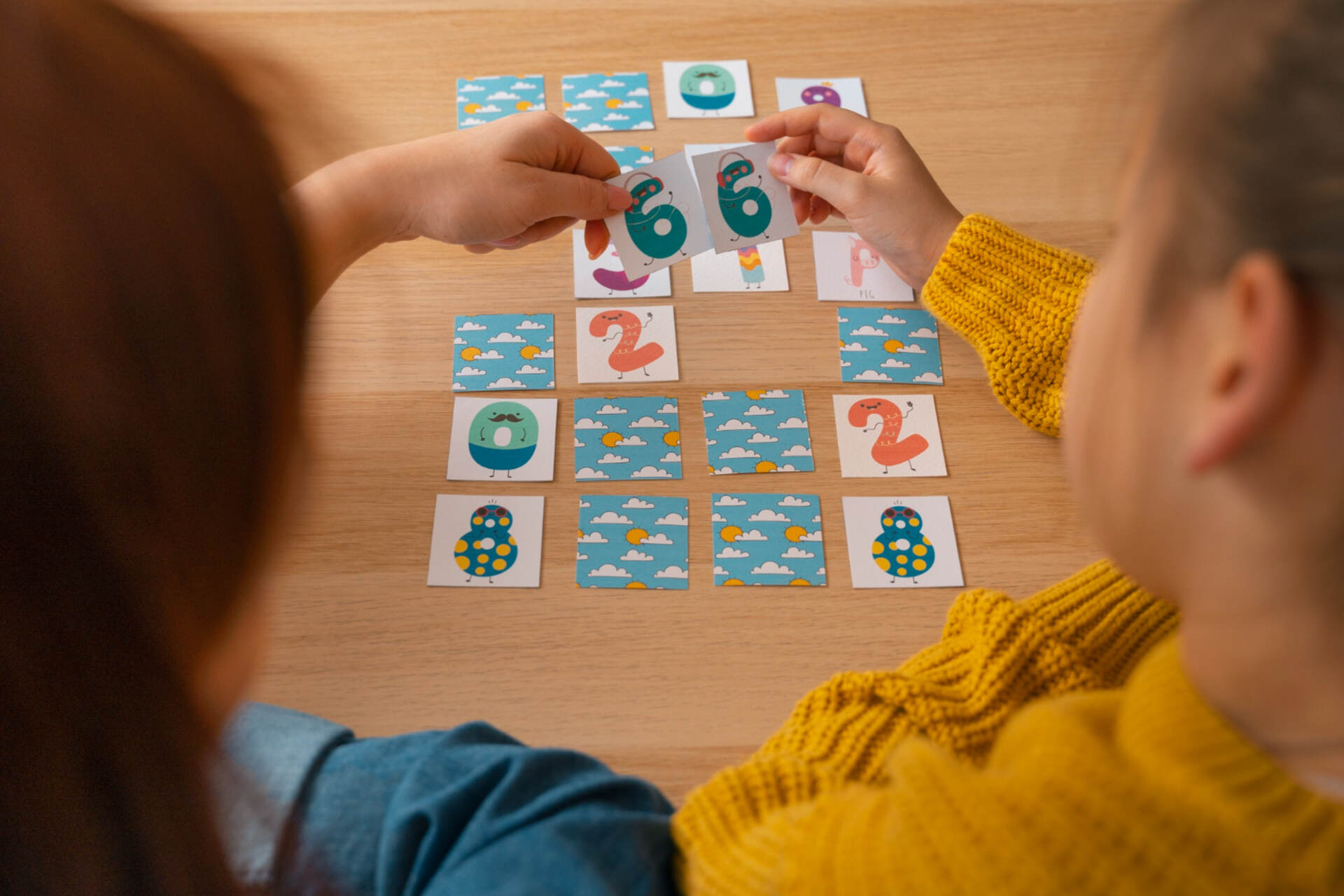
Some children quickly begin solving math problems during independent work time, while others pause, count on their fingers, or hesitate before writing an answer. Early math can feel challenging as children are still learning how numbers work together.
Hands-on number sense activities can make these early math concepts feel easier to understand. Using counting cubes, dice, number cards, games, movement activities, and visual worksheets allows children opportunities to explore numbers in more interactive, low-pressure ways.
In this article, you’ll discover fun number sense activities and printable ideas designed to help children strengthen their understanding of early math concepts.
Number sense helps children understand that numbers are more than symbols written on a page. It helps children recognize quantities, compare amounts, and use numbers in ways that feel meaningful during everyday situations.
A child with strong number sense may quickly notice which group has more objects, identify simple number patterns, or solve a problem using their own strategy instead of memorized steps.
Hands-on experiences with numbers give children opportunities to explore math concepts in flexible ways to build a stronger understanding.
Children are more likely to be engaged with math when they are too busy playing to notice how much practice they are getting. The activities below combine learning and play to strengthen early number sense skills.
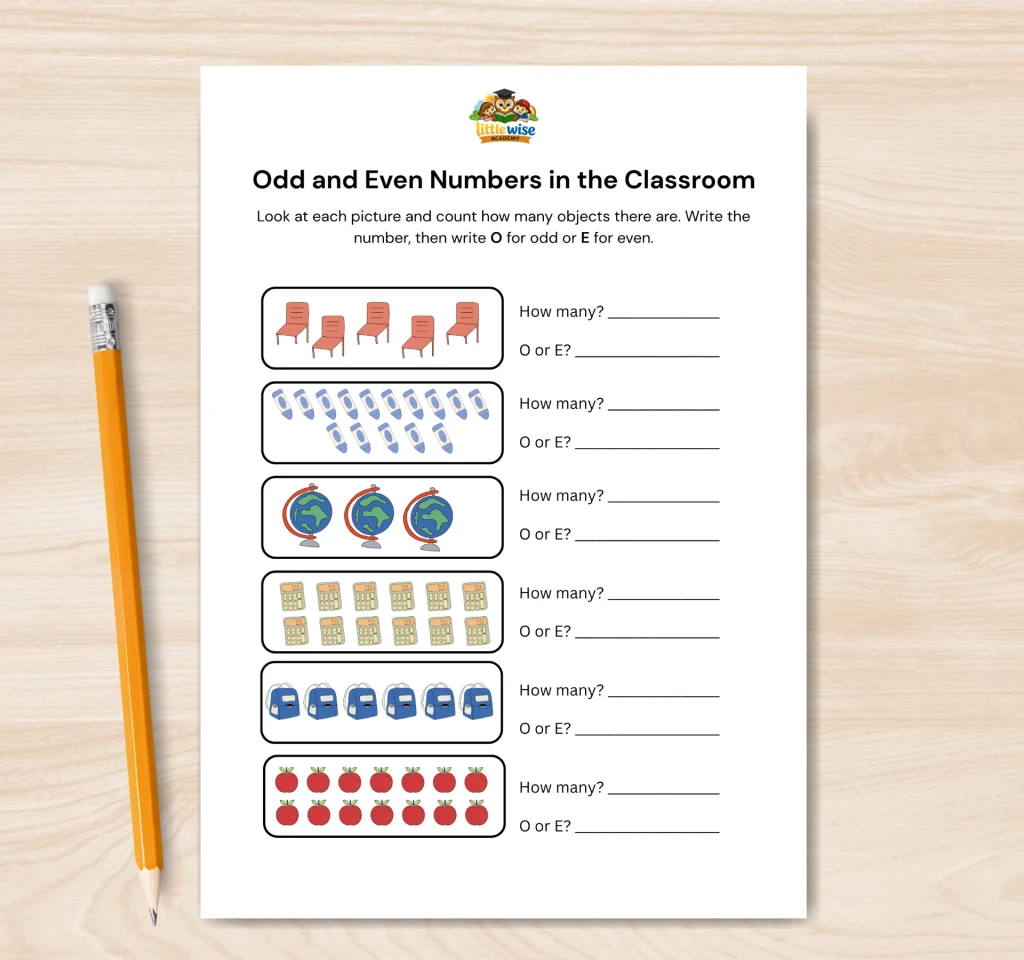
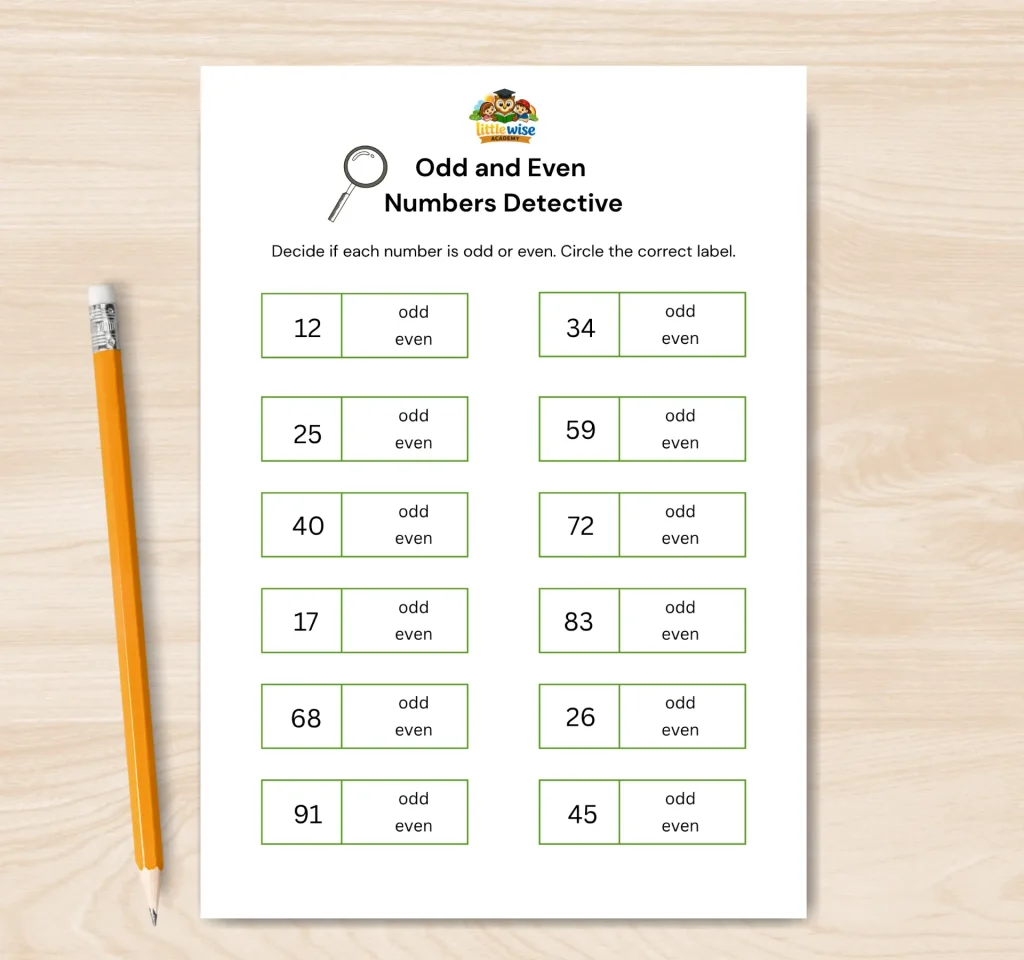
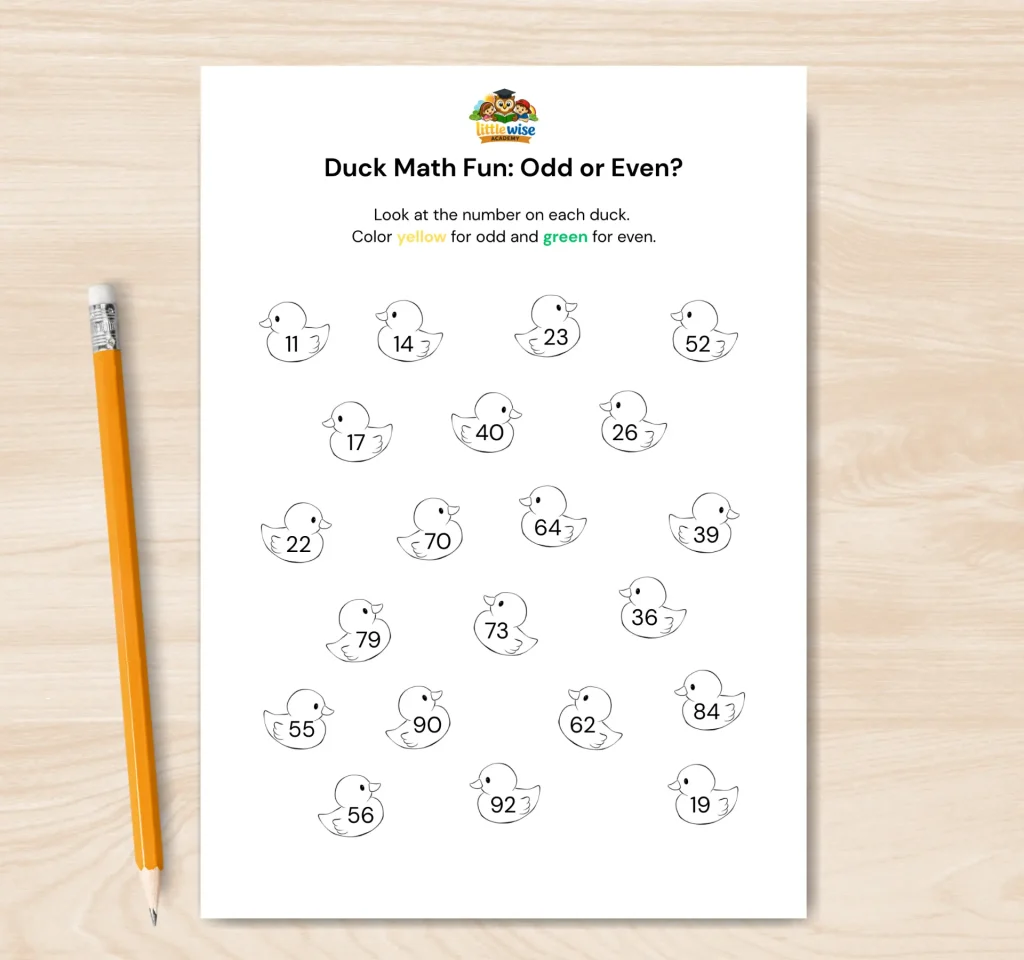
Odd and even numbers describe whether a number can be divided into two equal groups. Even numbers can be paired evenly with nothing left over, while odd numbers always leave one extra item behind. For example, 8 can be split into two equal groups, while 5 leaves one remaining object.
These worksheets introduce odd and even numbers through colorful counting and sorting exercises. In the Duck Math Fun: Odd or Even? worksheet, children look at the number on each duck, decide whether it is odd or even, and color the ducks yellow for odd numbers and green for even numbers.
Another activity turns learners into “number detectives” as they study each number and circle the correct odd or even label.
The worksheets also include classroom object counting activities where children count school supplies, write the total number, and identify whether the amount is odd or even by writing “O” or “E.”
Number hunts are interactive “search-and-find” activities where children look for hidden numbers around a classroom, home, or learning space.
Hide number cards around the room or encourage children to search for numbers on clocks, books, calendars, labels, doors, or classroom materials. After finding a number, children can say it aloud, place it in order, or match it with the correct quantity using small objects.
Numbers begin making more sense to children once they can connect them to real amounts they can see and count. Number matching helps children connect written numbers with real quantities through visual and hands-on practice.
To do this activity, place number cards and matching quantity cards on a table or floor. Children count the objects carefully and connect each number to the group showing the correct amount. For example, learners may pair the number “5” with five counters or a card showing five dots.
Another variation is to place matching cards face down and turn the activity into a memory game where children search for pairs.
Bingo turns number practice into an interactive game where children listen carefully and search for matching numbers on their cards.
Prepare bingo cards filled with numbers. A caller says a number aloud or shows it using flashcards, pictures, dots, or objects while children cover the matching number on their cards using markers, coins, or small objects.
The game continues until a child completes a row, column, or full board and calls out “Bingo!” Teachers and parents can also use counting pictures or simple math problems instead of only calling out numbers.
Simple rewards like stickers, stamps, or choosing the next caller can help keep children motivated and excited to participate.
Create simple “I Spy” challenges using pictures filled with hidden numbers and objects. While exploring the picture, children may spot certain numbers, count groups of objects, or look for numbers in sequence as they complete the activity.
The activity can also be turned into a classroom scavenger hunt by hiding number cards around the room for children to discover. This keeps learners moving, observing, and interacting with numbers in a more playful way.
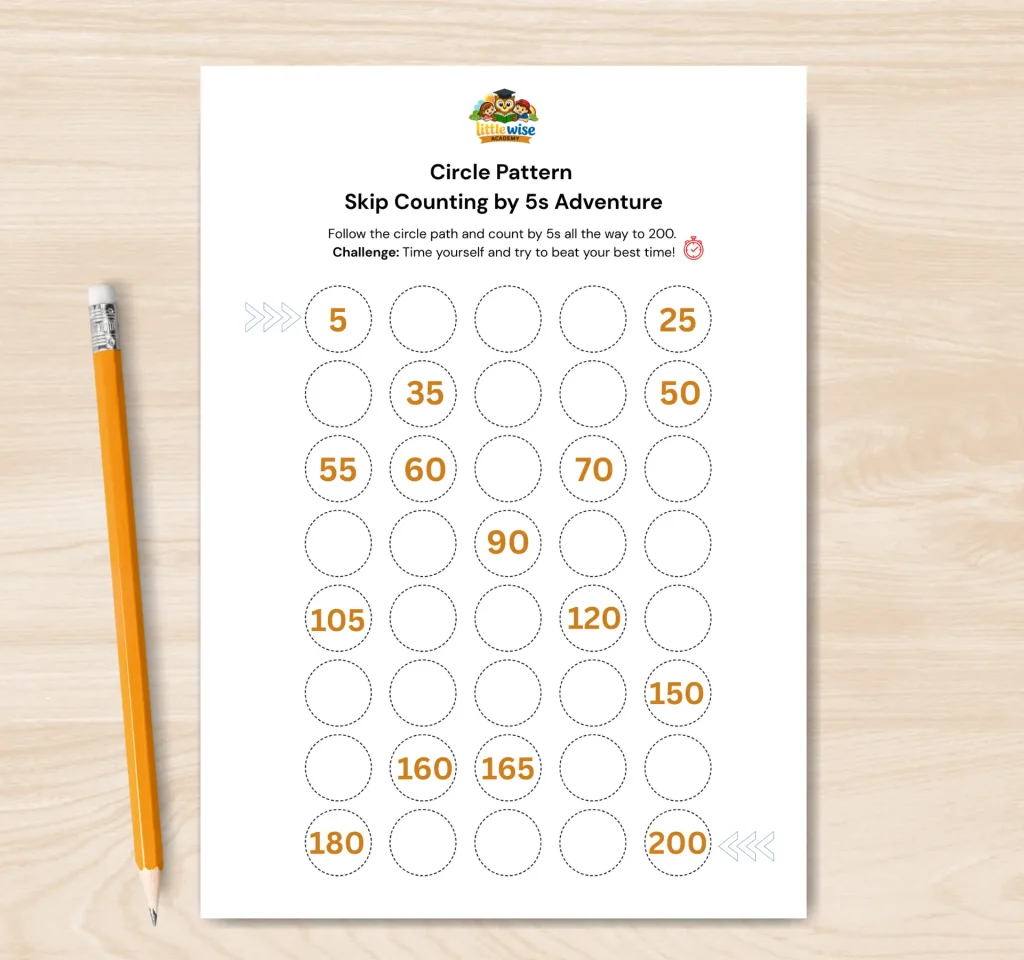
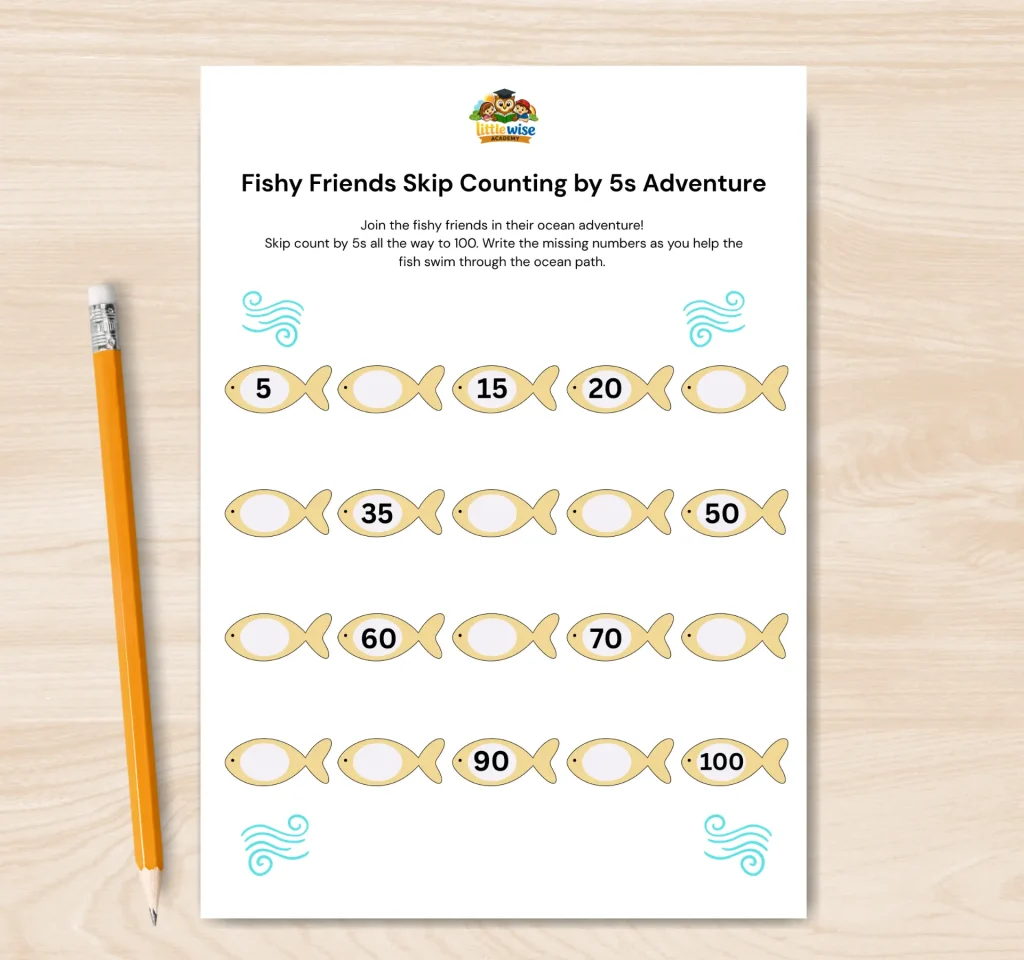
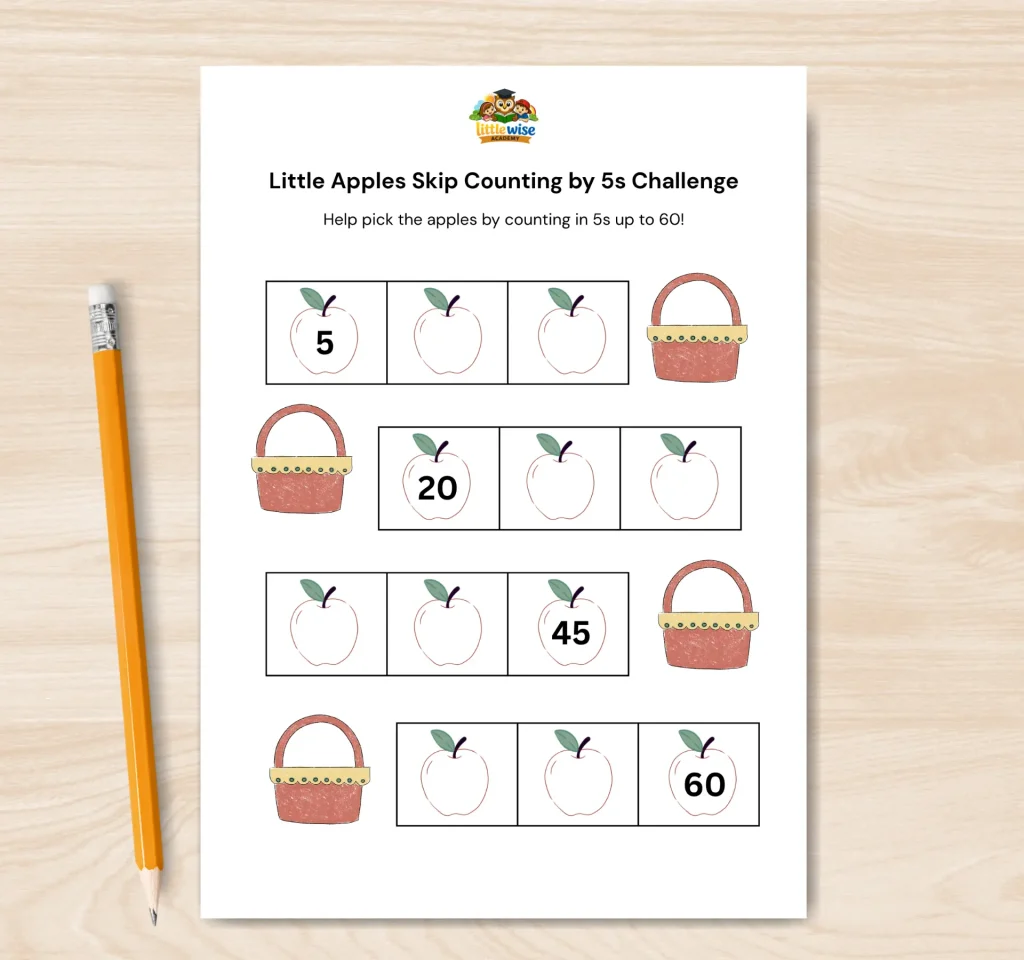
Counting by 5’s worksheets help children practice skip counting through number patterns and sequencing activities.
In the Circle Pattern Skip Counting by 5s Adventure worksheet, children follow the circle path and fill in the missing numbers while counting by 5s all the way to 200. The activity also includes a small challenge where learners can time themselves and try to beat their best score.
The Fishy Friends Skip Counting by 5s Adventure worksheet turns skip counting into an ocean-themed activity where children help the fish swim through the path by completing the missing numbers while counting by 5s up to 100.
Meanwhile, Little Apples Skip Counting by 5s Challenge, encourages children to complete the missing numbers on the apples while helping fill the baskets through skip counting practice.
Ten-frame manipulatives are hands-on math activities that help children visualize numbers using a frame divided into ten spaces.
Children use counters, cubes, buttons, pom-poms, or other small objects to fill the boxes while counting aloud and building different numbers. The frames can also be used to compare quantities, identify missing numbers, or practice simple addition.
For an easy everyday variation, small snacks, coins, or toy pieces can also be used as counters. Familiar objects can make number practice feel more playful and relatable during learning time.
Young children quickly notice when numbers are “out of place,” especially during counting games or classroom routines. Number ordering helps learners understand that numbers follow a sequence and that each number has its own position. Recognizing what comes before, after, and between numbers strengthens sequencing and counting skills.
Many young children naturally restart from 1 whenever they count, even if they already know the starting number. Counting on and counting back activities help children move beyond this habit by encouraging them to continue counting forward or backward from any number.
For example, a child may begin at 6 and count to 10 or start at 12 and count backward to 7.
Number lines and paths give children a chance to “travel” through numbers instead of simply reading them from a page. Seeing numbers stretched across the floor, wall, or table helps children visualize how counting moves step by step from one number to the next.
Children can follow the path while counting aloud, searching for missing numbers, or solving simple addition and subtraction problems by moving forward and backward along the line.
Movement can make the activity more exciting. Children may hop between numbers, race toy cars across the path, or roll dice to decide how many spaces to move during counting challenges.
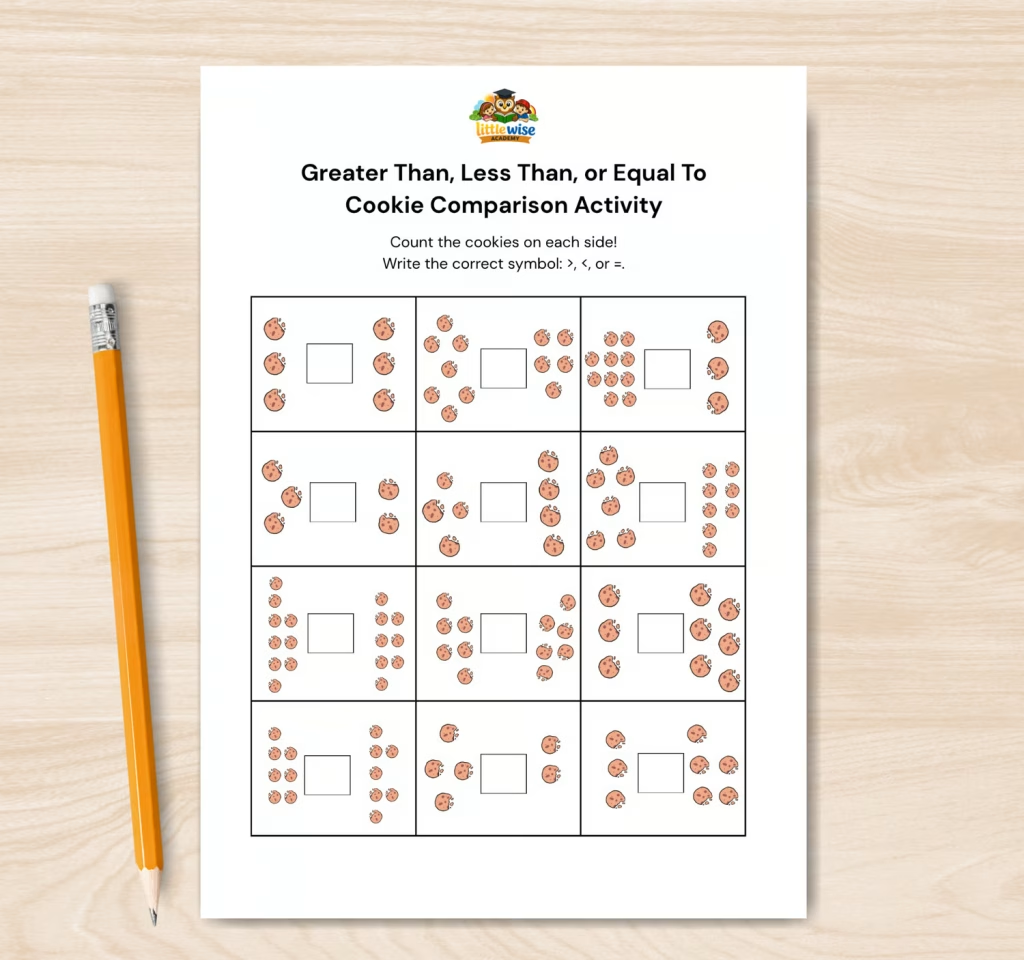
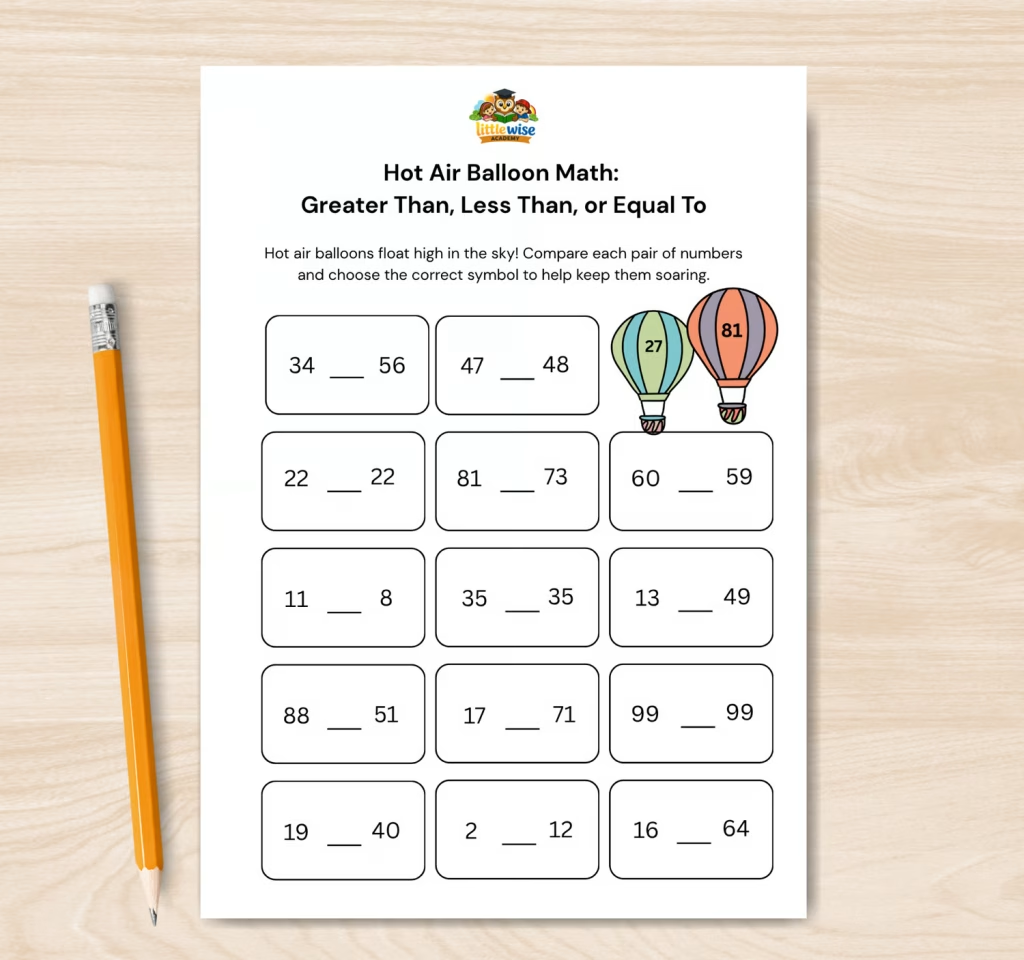
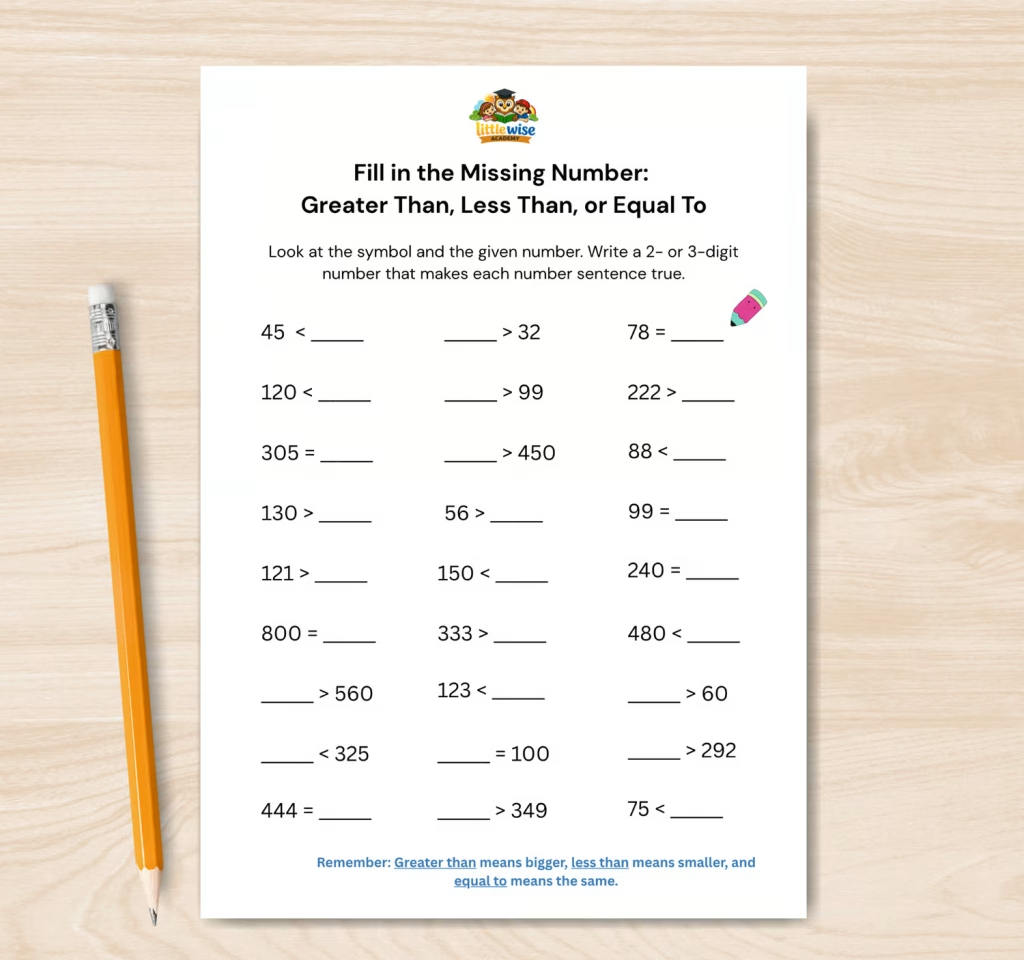
Children begin comparing amounts early on, whether noticing which plate has more cookies or which basket has fewer toys. Greater than, less than, and equal to worksheets give children practice comparing numbers and understanding quantity relationships in a clear visual way.
In the Greater Than, Less Than, or Equal To Cookie Comparison Activity, children count the cookies on each side and write the correct comparison symbol in the box.
The Hot Air Balloon Math worksheet asks learners to compare pairs of numbers and choose the correct symbol to help keep the balloons “floating.”
Another worksheet challenges children to fill in missing numbers that make each comparison sentence true using greater than, less than, or equal to symbols.
Pattern Block Numbers are hands-on activities that help children explore numbers using colorful shapes and manipulatives.
Children build different numbers using pattern blocks, magnetic shapes, or paper cutouts while counting the pieces they place together. Learners can also compare groups, sort shapes, or create simple pictures while practicing quantity recognition.
Count the Room turns number practice into a mini classroom adventure where children move around searching for hidden numbers and counting clues.
Number cards, pictures, or counting challenges can be placed around the learning space for children to find. Children move around the room identifying numbers, recording answers, and completing simple counting tasks along the way.
Provide children with a spinner and counting objects like cubes, counters, or pom-poms. After spinning, children count out the matching quantity, place objects onto a game board, or color the correct number of spaces.
Prepare printable number puzzles where one piece shows a number and the matching piece shows dots, pictures, or objects. Children connect the correct pieces together while practicing counting and number recognition skills.
The puzzles can also include missing numbers, number sequences, or simple counting patterns to make the activity more interactive.
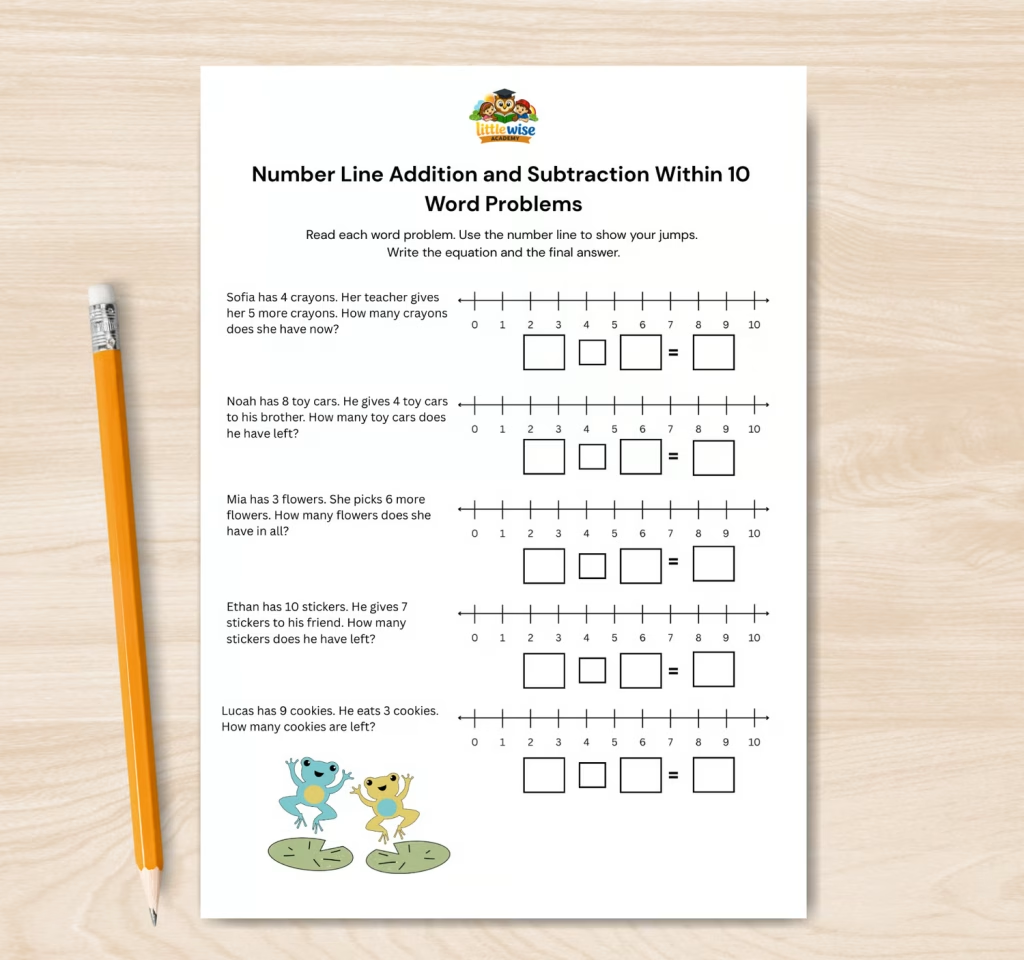
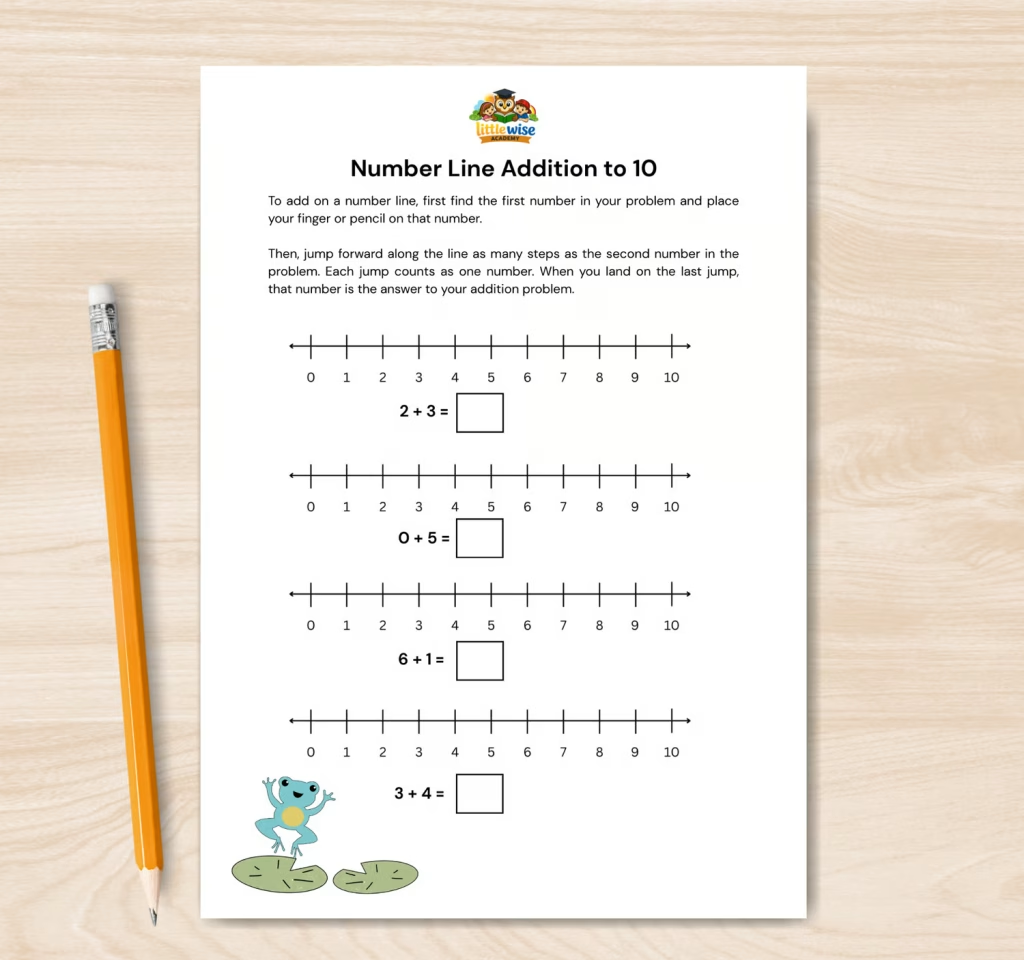
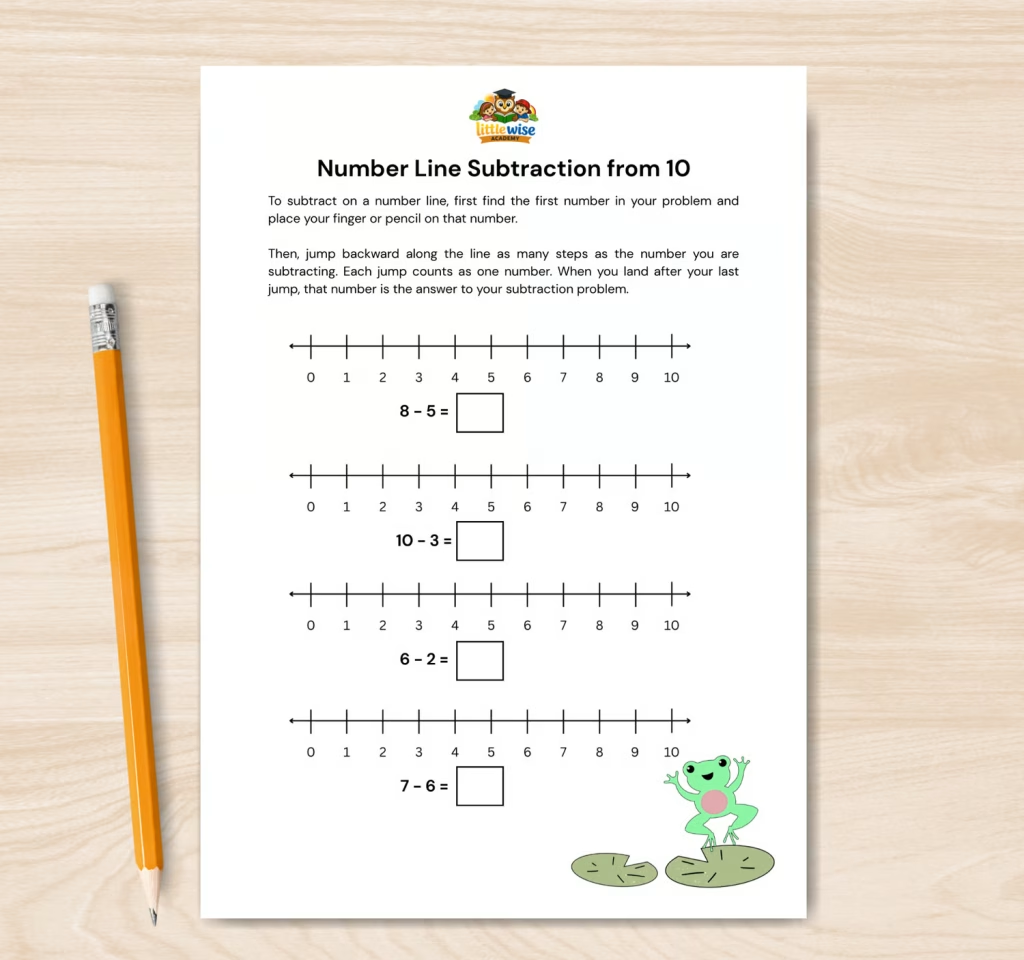
Number line worksheets help children understand math problems by showing numbers in a clear step-by-step sequence.
In the Number Line Addition to 10 worksheet, children start at a number and make forward jumps to solve addition equations. The Number Line Subtraction from 10 worksheet asks learners to move backward along the number line while solving subtraction problems.
Another worksheet combines number lines with simple word problems. Children read short math stories, show their jumps on the line, and complete the matching equation before writing the final answer.
Roll and Build Numbers combines counting and building into an interactive math game.
Children roll dice and use blocks, cubes, or small objects to build a tower that matches the number rolled. Some children may compare whose tower is taller, while others combine groups together or continue building until they reach a target number.
Children count the dots on each domino and match them with the correct number card or quantity. Dominoes can also be grouped, sorted, or lined up in sequence to create additional counting challenges during the activity.
Call out a number and ask children to complete the matching movement, such as hopping, clapping, jumping, or marching. Learners count each movement aloud while practicing number recognition and counting skills.
Children use dot markers, stickers, or stamps to place the correct quantity beside each number shown on the worksheet. Some activities may also include tracing numbers, filling spaces with dots, or connecting groups of dots with the correct number.
The coloring, stamping, and tracing movements can also help strengthen fine motor skills, especially for preschoolers.
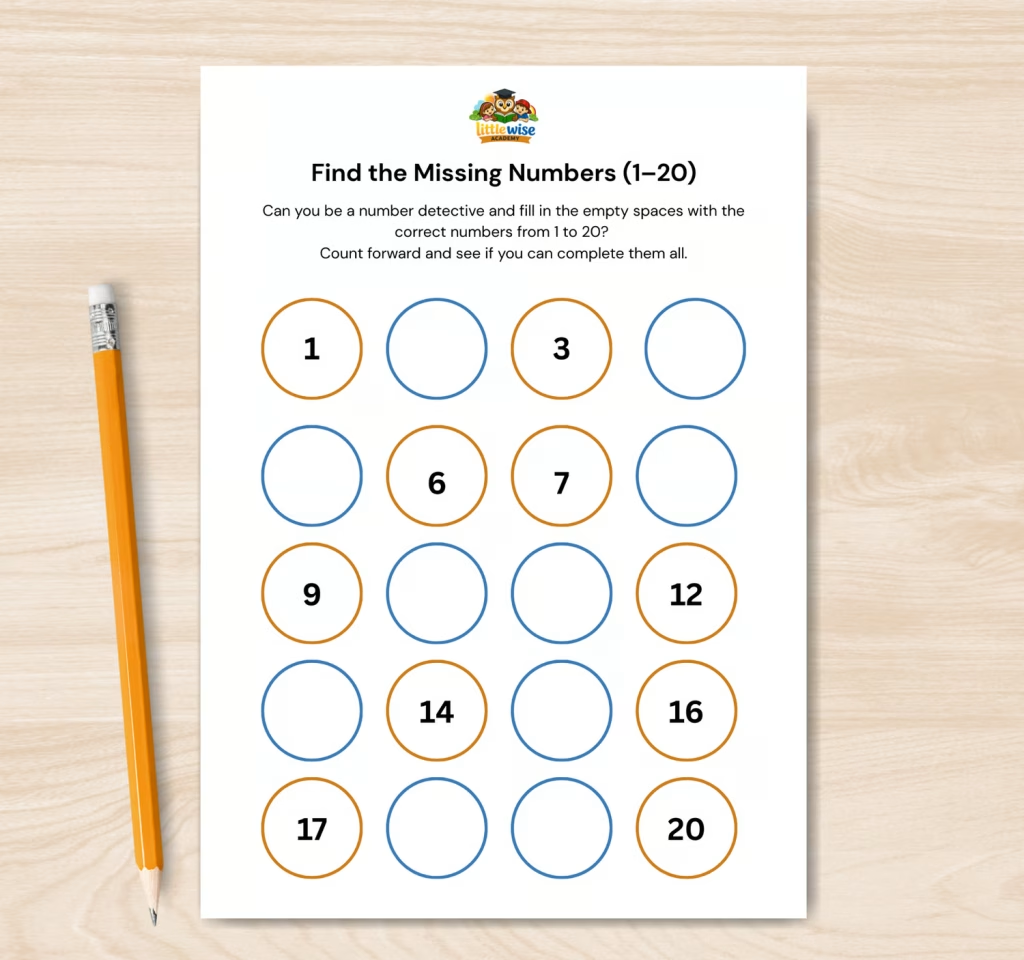
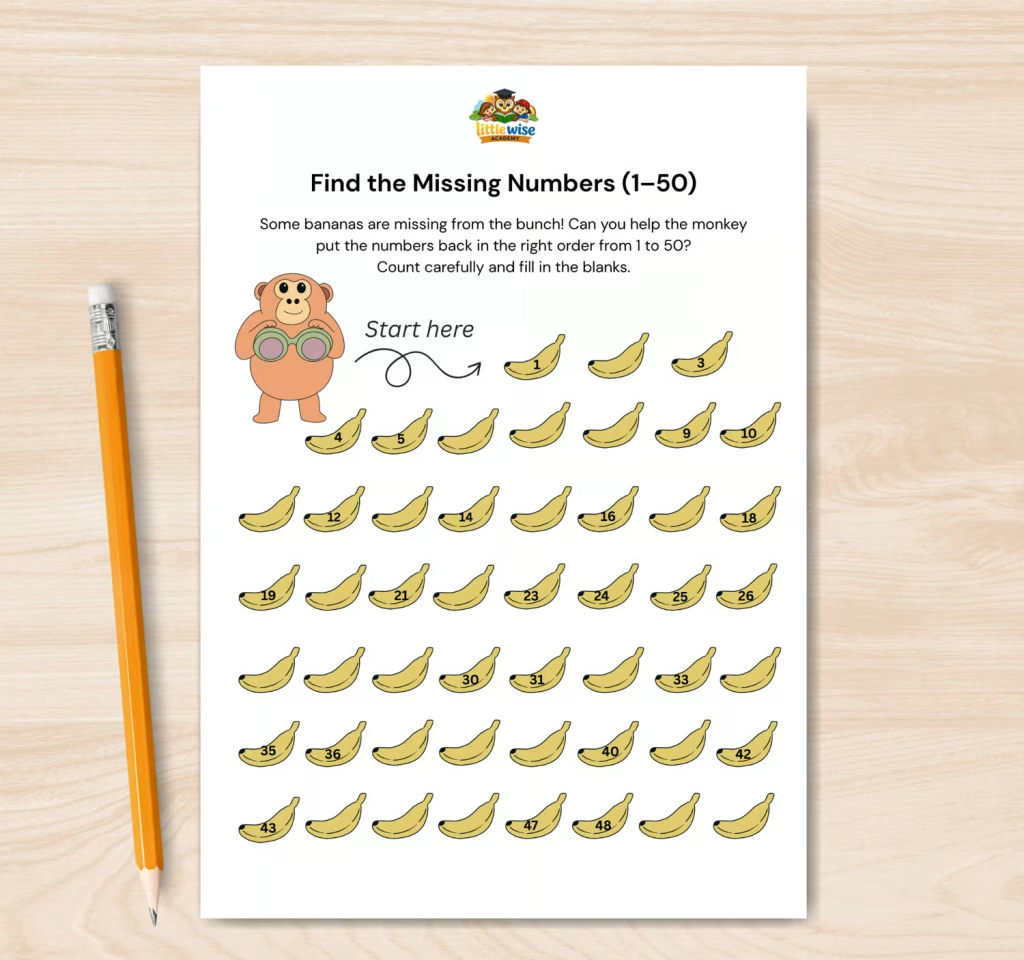
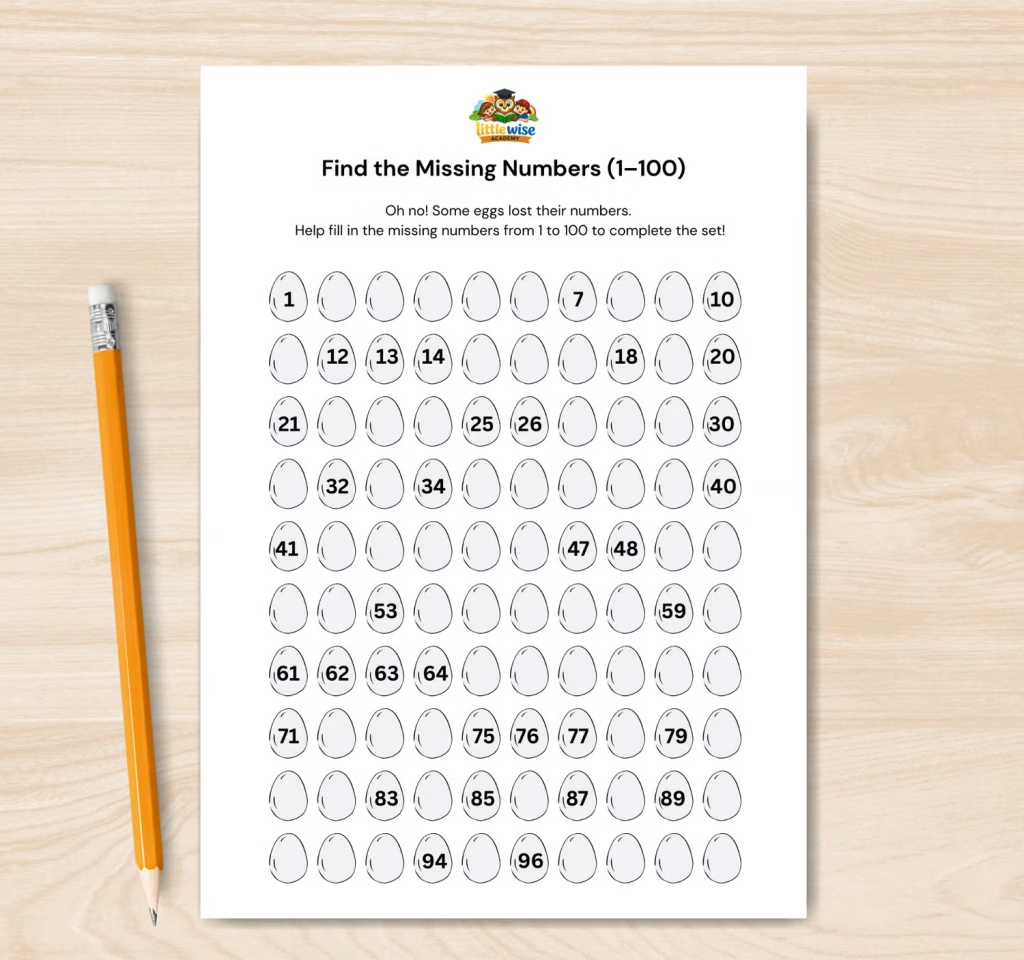
Children usually notice quickly when a number is missing during counting activities, which is what makes missing-number worksheets feel a bit like solving a puzzle.
In the Find the Missing Numbers (1–20) worksheet, children act like little number detectives as they count forward and fill in the empty spaces with the correct numbers.
The Find the Missing Numbers (1–50) worksheet adds a playful banana theme where learners help place the missing numbers back in order from 1 to 50.
The Find the Missing Numbers (1–100) worksheet introduces larger counting sequences by asking children to complete the missing numbers on the eggs to finish the set correctly.
Children use counters, pom-poms, buttons, cubes, or small toys to show the correct amount on each mat. Some versions include themed pictures like animals, food, shapes, or seasonal images for children to count and cover during the activity.
Using real objects during counting practice helps children connect written numbers with actual quantities in a more visual and interactive way.
Create a hopscotch path using chalk, tape, or printable floor numbers for children to hop through while counting aloud. The game can also include counting backward, finding missing numbers, or completing simple number challenges while moving through the path.
Children use blocks, cubes, counters, or small objects to build different quantities before comparing which group has more, fewer, or the same amount.
The activity can also include arranging groups from smallest to largest, matching equal quantities, or building towers to compare which one is taller or shorter.
Mystery Number Bags add a fun surprise element to counting activities by hiding small objects inside bags or containers for children to explore.
Fill bags with buttons, blocks, pom-poms, counters, or other small items and encourage children to guess how many objects might be inside before taking them out to count. Some children may also enjoy comparing which bag feels heavier, lighter, fuller, or emptier during the activity.
Building number sense takes time, especially as children learn how numbers connect, compare, and form patterns. Some skills will come more easily than others, and small mistakes during counting or sequencing are a normal part of the learning process.
Games, hands-on activities, and worksheets give children opportunities to work with numbers in more engaging ways. Regular opportunities to count, sort, and recognize patterns can gradually build confidence and become more comfortable with math over time.
Turn family movie night into a learning experience with these 8 math movies for kids.
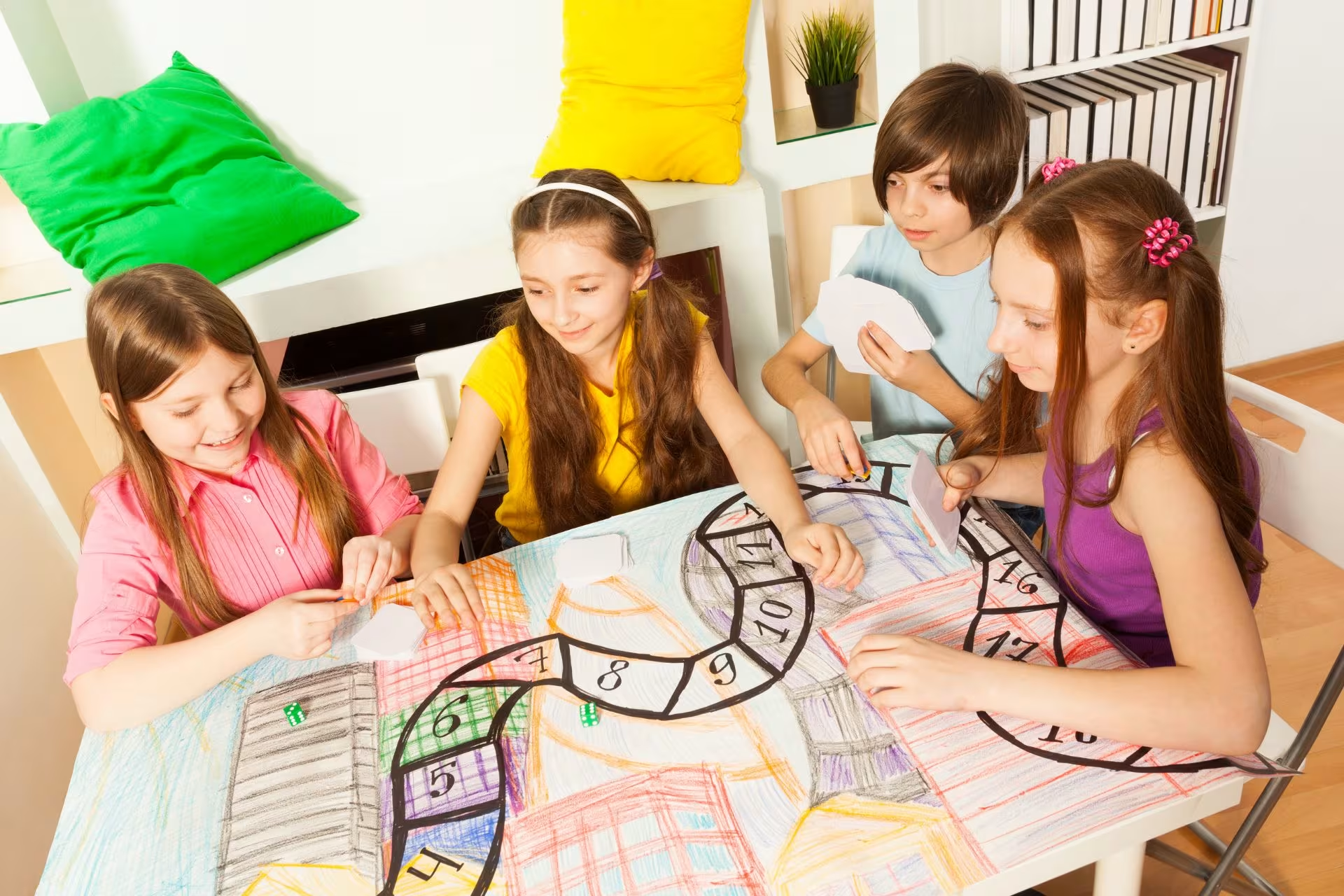
Make math exciting with board games that teach math through play! This list of top picks includes fun, age-appropriate options for kids 3 and up.

Discover 30 best math books for kids ages 2-12. Find books about counting, shapes, operations, patterns, logic, and more.
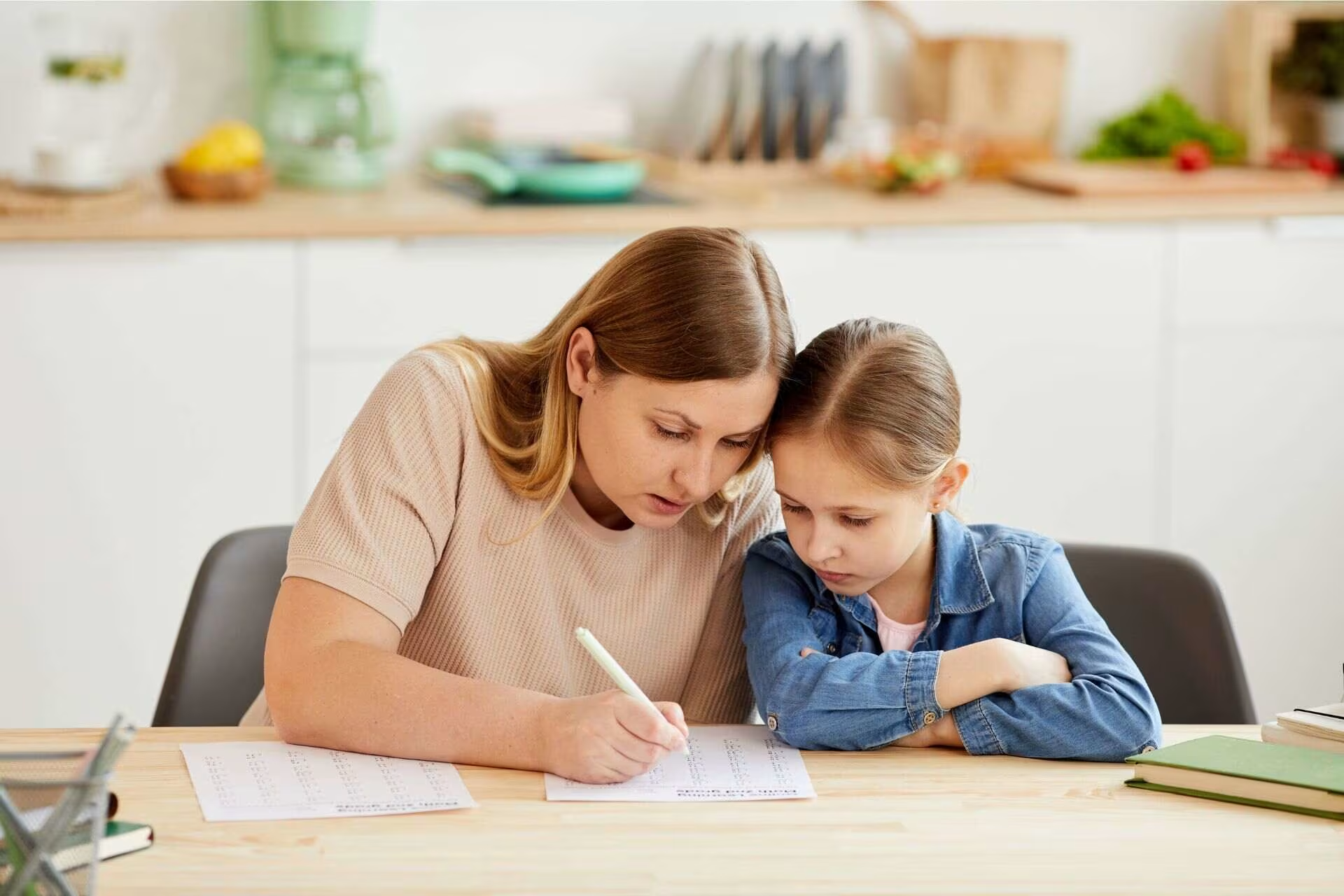
Learn what math anxiety is, how to spot the signs, and ways to help your child feel more confident with math.
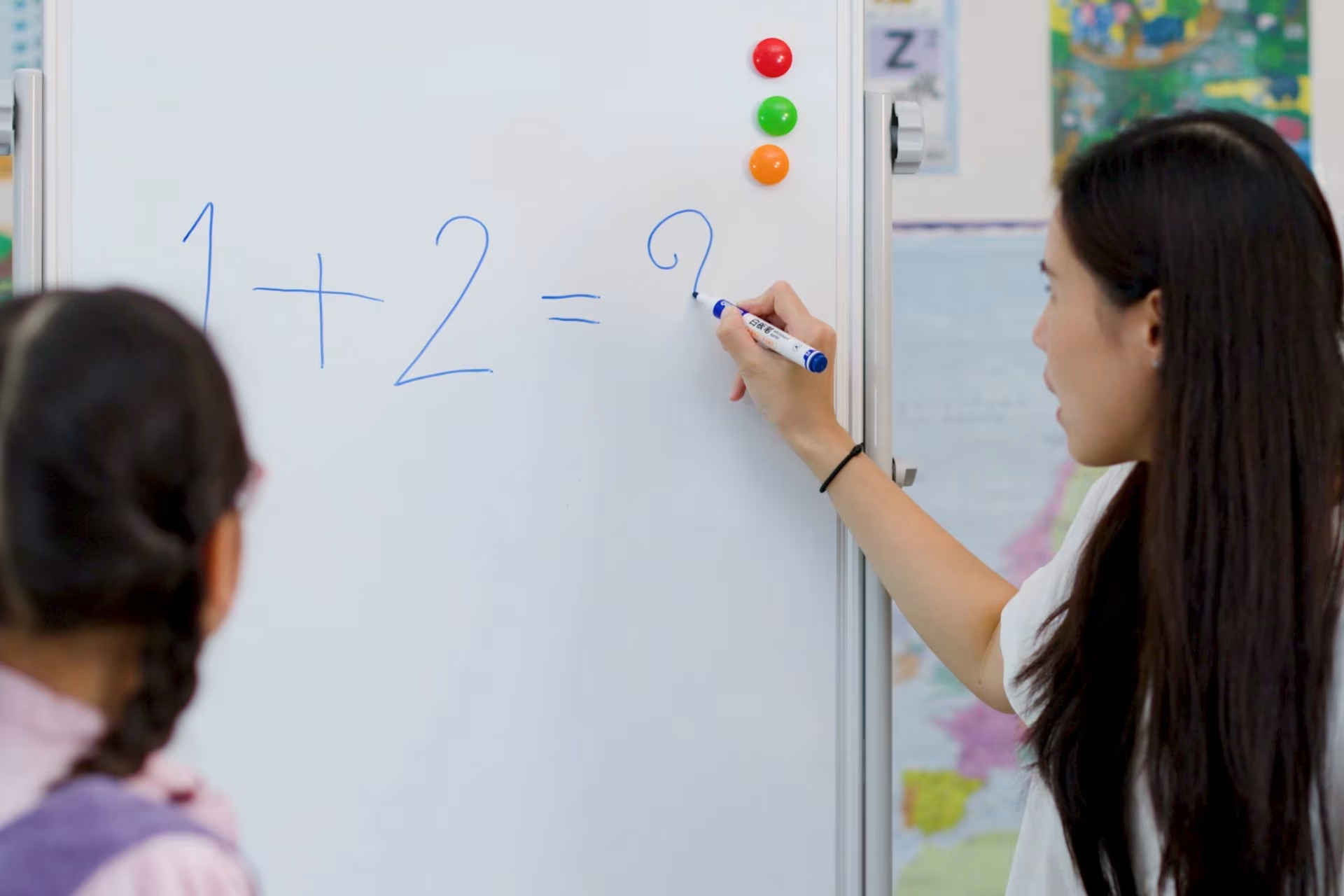
Addition and subtraction build the foundation for future math success. Learn when kids develop these skills and get fun, everyday practice ideas.