Curious about homeschooling? Learn how it works, its benefits and challenges, costs, and how to decide if learning at home is right for your family.
Children learn science best when they can explore ideas through simple, hands-on experiences. Activities that involve observing, predicting, testing, and asking questions help children explore how the world works around them.
These hands-on science activities for kids are designed for different age levels and learning settings, including classrooms, home practice, and small group learning. Each activity encourages curiosity while strengthening important thinking skills such as noticing patterns and comparing results.
Whether learners are testing everyday materials, exploring water movement, or watching how plants grow, these experiences make science feel active and enjoyable. Plus, they help build confidence.
Toddlers naturally learn science through sensory play, where activities encourage observation. Try the activities below:
Fill a small container with water and invite toddlers to place safe objects inside one at a time. Before dropping each item, ask, “Do you think this will stay on top or go to the bottom?”
Watching what happens next turns the activity into a fun guessing game!
Place baking soda in a small cup and slowly pour vinegar over it to create a bubbly “volcano.” The fizzing sound and rising foam quickly grab attention and make children eager to watch what happens next. This creates a clear example of how mixing ingredients can create exciting changes.
Pour milk into a shallow dish and add drops of food coloring around the surface. Touch the milk with a cotton swab dipped in dish soap and watch how the colors quickly move and spread across the plate.
Learners can observe how the colors swirl, separate, and travel in different directions after the soap touches the milk.
This colorful reaction introduces how soap interacts with fats in milk. Learners can notice how one small change can affect an entire surface at once.
In this activity, kids discover how touch can affect the properties of a substance using materials that behave like both liquids and solids.
To get started, mix cornstarch and water together until the mixture becomes thick and smooth. Tap it quickly with your fingers, then scoop it slowly to compare how it feels in each movement.
Take a short walk outside and invite toddlers to gather a few leaves, sticks, or small stones. After collecting them, help group the items by size, color, or shape. Sorting what they find shows how natural objects can be alike or different.
Fill a clear jar with water and add shaving cream on top to make a fluffy cloud layer. Slowly drop colored water onto the cloud and watch as the color builds up before dripping through in different places. Sometimes the rain falls in one spot, and sometimes it appears in another.
What happens when the cloud gets full? These changes create a small weather model that helps learners observe how clouds release rain.
There is something exciting about not knowing what you might find next in a sensory bin. Fill a bin with safe materials like rice, sand, or beans and hide a few small toys inside for toddlers to uncover. As they dig deeper, they begin noticing how each material feels different in their hands.
These discoveries strengthen observation skills as learners compare textures, shapes, and hidden objects during exploration.
Have you ever seen something “dance” in a glass without touching it? Drop a few raisins into sparkling water and watch as they slowly begin moving up and down. The motion keeps repeating, which makes it fun to follow with your eyes.
It’s a simple activity that helps children see how bubbles can lift objects and change how they move in water.
What kinds of shadow shapes can you make on the wall? Use your hands or small toys to create simple shadow puppets with a flashlight or sunlight. As the shadows change size and shape, they can start to look like animals or characters.
Small movements can create big changes in the shadow, which makes this activity fun to explore again and again.
Place a few ice cubes in a bowl and take a moment to look closely at how they appear at the start. Leave the bowl on the table and check again after a few minutes to see what has changed. You may find that the cubes have become smaller and a small puddle begins forming as the ice slowly turns into water.
The simplest part is that you only need ice and a bowl, which makes this activity easy to try anytime while exploring how materials can change little by little.
Preschoolers are naturally curious and enjoy activities that let them test ideas, watch changes happen, and talk about what they discover along the way. These activities focus on sensory exploration and early observation skills through simple cause-and-effect experiences.
Roll a small piece of paper into a tube that fits over a straw, then add fins or a pointed nose to create your rocket. Blow through the straw to launch it across the room and see how far it travels.
Like young engineers, children can experiment by changing the size of the fins or the length of the rocket and comparing how each version flies. These simple changes help show how shape and air movement affect speed, direction, and distance.
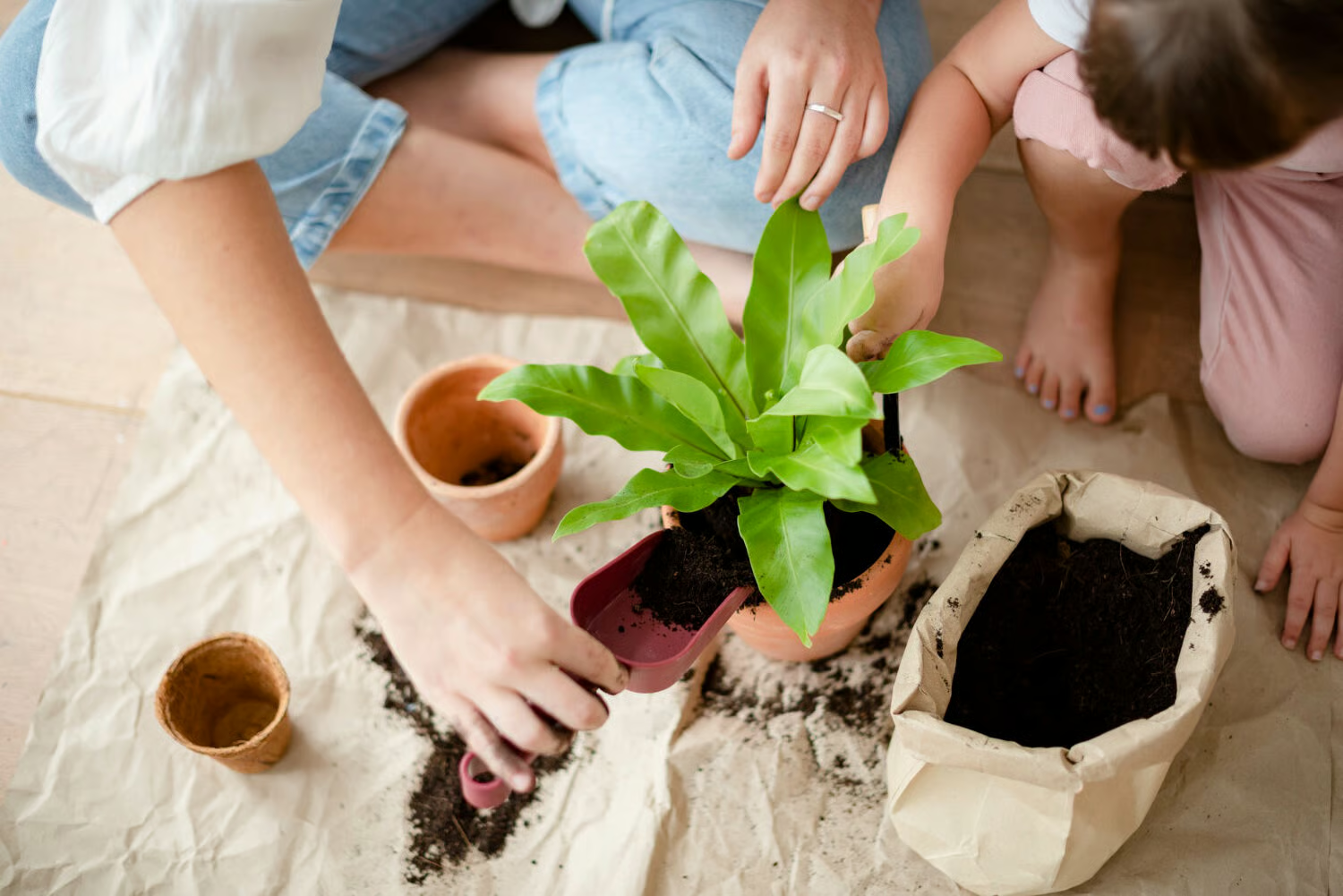
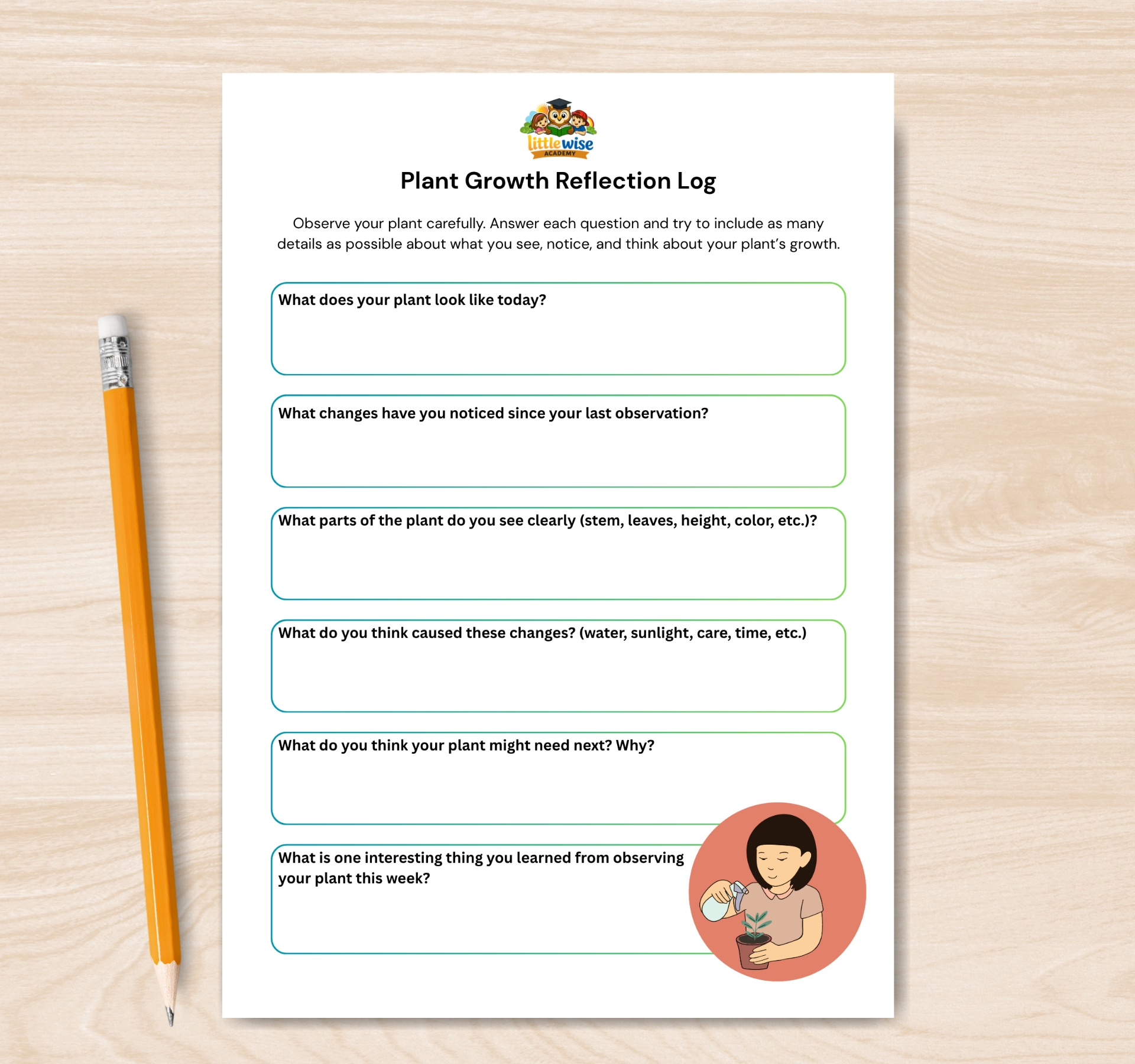
Choose a small plant to observe each day and record what changes over time. Learners can draw what they see, notice new leaves, track growth, and describe details such as size, shape, and color.
Watching these small changes each day helps learners recognize that plants grow gradually through clear stages.
Use this a Plant Observation Worksheet so that learners can organize their notes, compare daily changes, and better understand how plants develop step by step.
Mix glue with a slime activator such as liquid starch and stir slowly as the mixture begins to change. At first it looks smooth and runny, but soon it becomes thicker and stretchier with each turn of the spoon.
The teacher can keep learners engaged by asking questions like, “How is it changing as we mix?” It explains how combining materials can create something new they can see and feel.
Fold a simple paper airplane and launch it across the room to see how it travels. Try adjusting parts like the wings or nose and see how each change affects its path, distance, or landing.
These simple tests demonstrate how small adjustments change the way an object flies while encouraging learners to compare results and improve their designs.
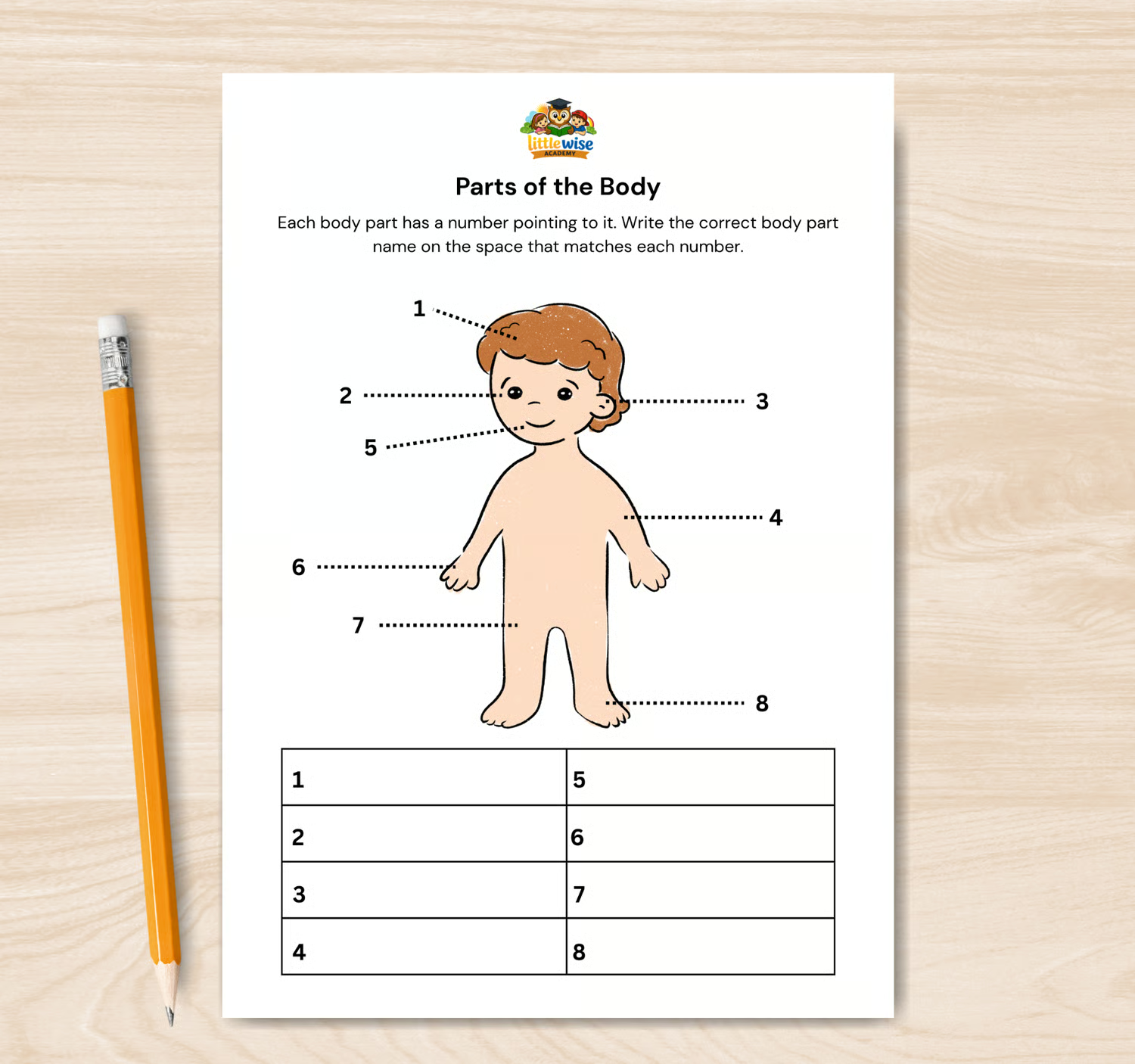
Invite learners to point to body parts such as the eyes, ears, hands, legs, and feet using a chart or worksheet. Talk together about what each body part helps them do. Which body part helps you see your friends? Which one helps you clap or wave hello?
Learners can also enjoy labeling pictures, matching body parts to their names, and choosing what each body part helps them do. A Parts of the Body Worksheet makes these activities more interactive and structured.
How can a balloon race across a string without being pushed?
Thread a string through a straw and tape an inflated balloon to the straw. When released, the balloon quickly shoots along the string as air escapes from the opening. Watch how the balloon changes as it moves along the string.
This quick motion makes it easier to see how escaping air can push objects forward in an easy-to-understand way.
Get ready to see a mini eruption happen right in front of you. Pour vinegar over a spoonful of baking soda and watch the mixture begin to fizz, bubble, and rise like a tiny volcano. Where do you think all those bubbles are coming from?
Mixing two simple kitchen ingredients can create a fast and visible change. The bubbling starts right away, which makes the cause and effect easy and exciting to observe for learners.
Create a small “weather window” by filling a clear plastic bag with a little colored water and taping it to a sunny window. Tiny droplets begin forming and slowly gathering along the surface.
As sunlight warms the water, learners can watch where the droplets appear and how they travel along the sides of the bag. This makes it easier to understand how heat changes water.
Pour water into a clear cup and invite learners to predict what might happen when oil is added. Slowly pour in the cooking oil and watch it settle above the water. Tilt the cup and see how the layers shift but do not mix.
Teachers can encourage learners to explain what they observed and compare how the two liquids behave.
Fill several clear glasses with different amounts of water. Tap each one with a spoon to compare the tones they produce. Which glass makes a higher tone, and which sounds lower?
The teacher can guide learners to arrange the glasses by pitch and try playing a simple pattern together, similar to a real xylophone. This is a clear example of how changing the amount of water affects the tone each glass makes.
Middle school science experiments give learners the chance to explore bigger ideas while testing their own predictions and discoveries. The activities below encourage learners to connect what they observe with the scientific ideas behind it.
Create a moving “lava lamp” inside a clear bottle using water, oil, food coloring, and a fizzing tablet. As the tablet reacts, bubbles form and carry the colored water upward before slowly sinking again. The bubbles rise because the reaction produces gas that lifts the colored water through the oil, and they sink once the gas escapes.
This activity demonstrates how gas formation can cause movement and how liquids with different densities stay in layers instead of mixing.
Warm the air inside a bottle, then place a peeled boiled egg over the opening. Without being pushed, the egg slowly moves into the bottle on its own. This happens because the air inside the bottle cools and the pressure inside drops, which allows the higher air pressure outside to push the egg inward.
Learners can see how something they cannot see, like air pressure, can still create strong movement.
Write a message using lemon juice and allow the paper to dry until the writing disappears. When the paper is gently warmed, the hidden message slowly becomes visible again as the lemon juice darkens faster than the surrounding paper. This happens because heat can speed up chemical changes and make hidden writing visible again.
How can dirty water become clearer using simple materials like sand and gravel?
Build a simple filter by layering gravel, sand, and cotton inside a bottle, then pour muddy water through it and compare the water before and after filtering. Each layer traps particles of different sizes, which makes the water clearer as it passes through the filter.
Learners can see how layered filtration works and why several materials are used together in real water-cleaning systems.
Prepare slime and mix in iron filings, then bring a magnet close to the surface and observe how the slime stretches and moves toward it. The iron filings inside the slime respond to the magnetic field and pull the material in that direction.
This explains how magnetic forces affect certain materials and change how they move and behave.
Rub a sewing needle several times in one direction with a magnet, then place the needle on a small piece of cork or foam floating in a bowl of water. After a moment, the needle slowly turns and settles in one direction.
This happens because the magnetized needle lines up with Earth’s magnetic field, just like a real compass.
Fill one glass with plain water and another with salt water, then gently place the same object, such as an egg or small potato slice, into both containers. The object sinks in plain water but floats in salt water. Adding salt increases the density of the water, which makes it easier for objects to float.
What happens when Mentos candies are dropped into a bottle of Coke? As soon as the Mentos fall into the soda, a tall stream of foam quickly shoots out of the bottle.
The rough surface of the Mentos provides many tiny spaces where carbon dioxide gas can escape quickly from the soda. The rapid release of gas creates the strong burst of foam seen during the activity.
Why does the foam grow so quickly during this reaction? When hydrogen peroxide reacts with yeast, oxygen gas forms and expands inside the soap, pushing the foam upward. The yeast speeds up the reaction by acting as a catalyst.
It shows how fast changes inside a mixture can create visible movement.
Fill several cups with colored water and connect them using folded paper towels placed between the cups. Gradually, the colored water begins to travel along the paper towels and move into the empty cups.
This movement happens through capillary action, the same process plants use to carry water from their roots to their leaves. It helps learners see how water can travel through very small spaces inside plant stems.
Science activities become even more meaningful when learners are encouraged to observe changes carefully and predict what might happen. Here are some ways to help them get more from each activity:
Science activities give learners plenty of chances to explore how the world works. Simple experiments spark curiosity in younger learners, while investigation-based activities help older learners strengthen their thinking skills and understand why changes happen.
Even everyday materials can become fun learning tools. Worksheets and observation charts make it easier to track discoveries, notice details, and keep their curiosity about science growing.
Curious about homeschooling? Learn how it works, its benefits and challenges, costs, and how to decide if learning at home is right for your family.
Help kids understand verbs with simple explanations and fun examples they’ll remember.
Want to help your child enjoy reading more? Try these easy ways to make story time more interactive, creative, and lovable.
Help kids master capitalization with the M.I.N.T.S. rule, and other essential capitalization rules.
Help your child master nouns with easy explanations of common, proper, concrete, abstract, and other types of nouns, plus everyday examples.