Curious about homeschooling? Learn how it works, its benefits and challenges, costs, and how to decide if learning at home is right for your family.
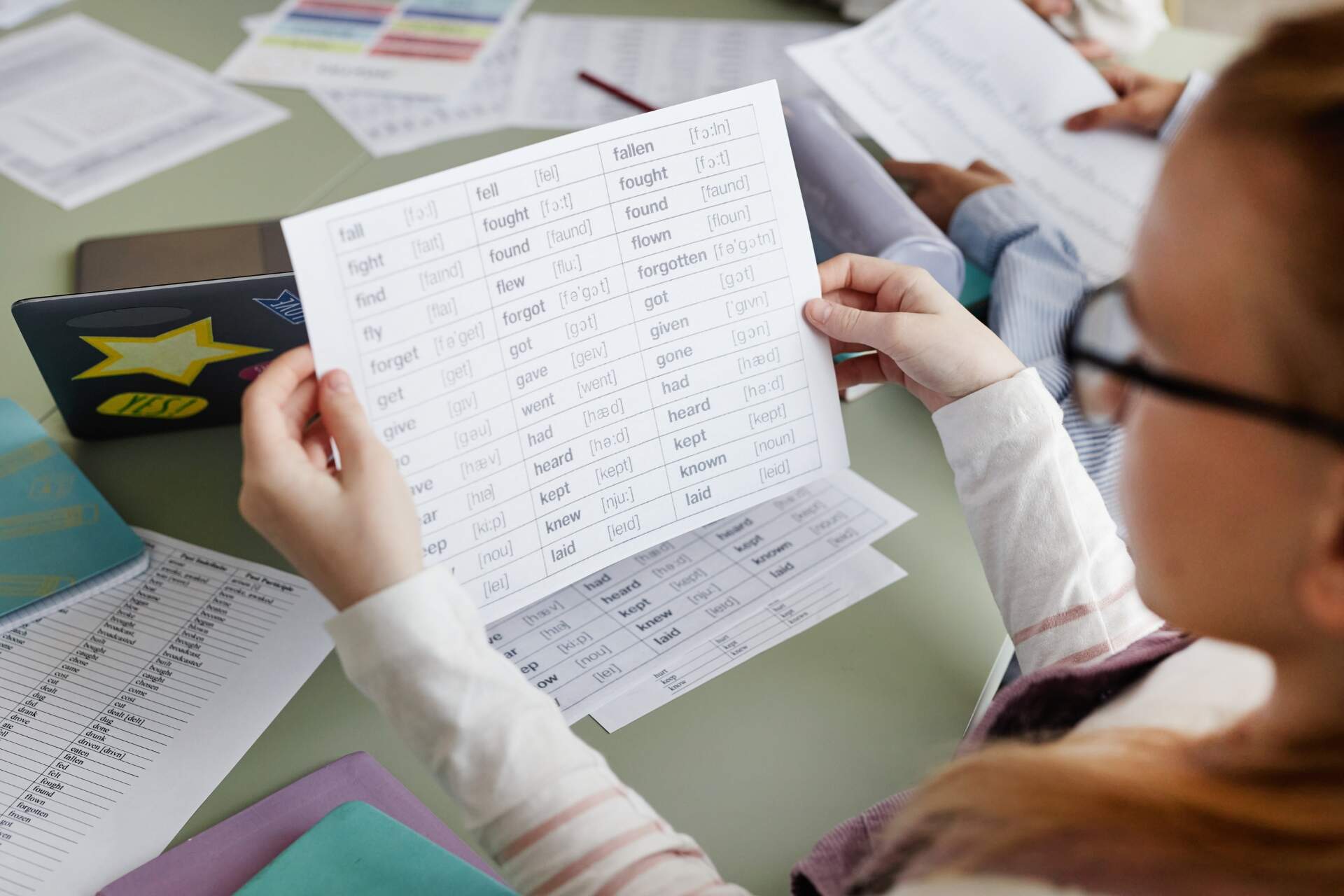
How many verbs have you and your child used today without even thinking about them? You wake up, eat breakfast, talk with your family, read a book, and play with friends. Verbs are part of almost every conversation and sentence we use.
As a parent, you may already be helping your child practice verbs through everyday conversations. When you ask, “What did you do today?” or “What will you do tomorrow?” you are helping your child think about actions and when they happen.
In this article, we’ll discuss the different types of verbs, how verb tenses work, and how to identify verbs in sentences. We’ll include plenty of examples to help you teach and reinforce verbs with them.
A verb is a word that shows an action, occurrence, or state of being. In simple terms, verbs tell us what someone or something does, happens, or is.
Most sentences need a verb to make sense and express a complete thought. A verb helps tell the reader what is happening, what someone does, or what something is.
When helping your child find a verb, ask: “What is happening in this sentence?” This question can help them spot the verb.
Related: Parts of Speech for Kids
Now that we know what verbs are, it helps to look at the different ways verbs can work in a sentence. Children will come across many verbs as they read and write, but 3 important types to learn are action verbs, linking verbs, and helping verbs.
Action verbs show what a person, animal, or thing does. They can describe physical actions, such as run or jump, as well as actions we cannot see, such as think or remember.
Here are examples of action verbs:
Here are three sentence examples using action verbs from the list:
Note: The bolded words are action verbs because they describe the actions performed by the subjects.
Linking verbs connect the subject of a sentence to a word or phrase that describes or identifies it. Unlike action verbs, linking verbs do not show what the subject is doing. Instead, they help tell us what the subject is or what it is like.
Here are examples of linking verbs:
Here are three sentence examples using linking verbs from the list:
Note: In the first sentence, are connects the subject, flowers, to beautiful, which describes them. In the second, became connects brother to tired. In the third, smell connects cookies to delicious.
A helpful way to check: Ask whether the verb is connecting the subject to a description or name rather than showing an action. If it is, the verb may be a linking verb.
Helping verbs work together with a main verb to give us more information about an action or state. They can show when something happens, whether an action is continuing, or whether something is possible, expected, or necessary.
It can be a little confusing because linking verbs and helping verbs sometimes use the same words. For example, is, am, are, was, and were can be either linking or helping verbs. The difference depends on how the verb is used in the sentence.
Tip: A helpful way to tell the difference is to look at what comes after the verb. If the verb connects the subject to a description or identification, it is acting as a linking verb. If it works with another verb, it is acting as a helping verb.
Here are examples of helping or auxiliary verbs:
A helping verb usually comes before the main verb. Together, they form a verb phrase.
Here are three sentence examples using helping verbs from the list:
Note: In the first sentence, is is the helping verb and reading is the main verb. In the second, will helps the main verb visit show that the action will happen in the future. In the third, should helps finish show that the action is recommended or expected.
When we use a verb, we can do more than show what happens. We can also use the verb to tell us when something happens. This is called verb tense. It helps readers understand whether an action happened in the past, is happening now, or will happen in the future.
Present Tense
The present tense tells us that something is happening now or happens regularly:
Past Tense
The past tense tells us that something already happened:
Future Tense
The future tense tells us that something will happen later:
Looking at the same action in different tenses can help children see how verbs change to show when something happens. Once your child understands these three basic time periods, you can introduce more advanced verb forms.
The next step is learning how to find verbs in a sentence. A simple approach is to first find the verb, then figure out what kind of verb it is.
Ask: What is the subject doing or what is happening?
For example: The cat chased the mouse.
What did the cat do? It chased the mouse.
So, chased is the verb.
Once your child finds the verb, ask what job it is doing.
For example:
The boy kicked the ball.
Kicked shows an action, so it is an action verb.
The boy is tired.
Is connects the subject boy to the description tired, so it is a linking verb.
The boy is running.
Is works with the main verb running, so it is a helping verb.
When working with your child, don’t worry about identifying the type right away. Start by asking “What is happening?” and help them find the verb.
As soon as they can spot the verb, ask “What job is the verb doing?” to help them identify whether it is an action, linking, or helping verb.
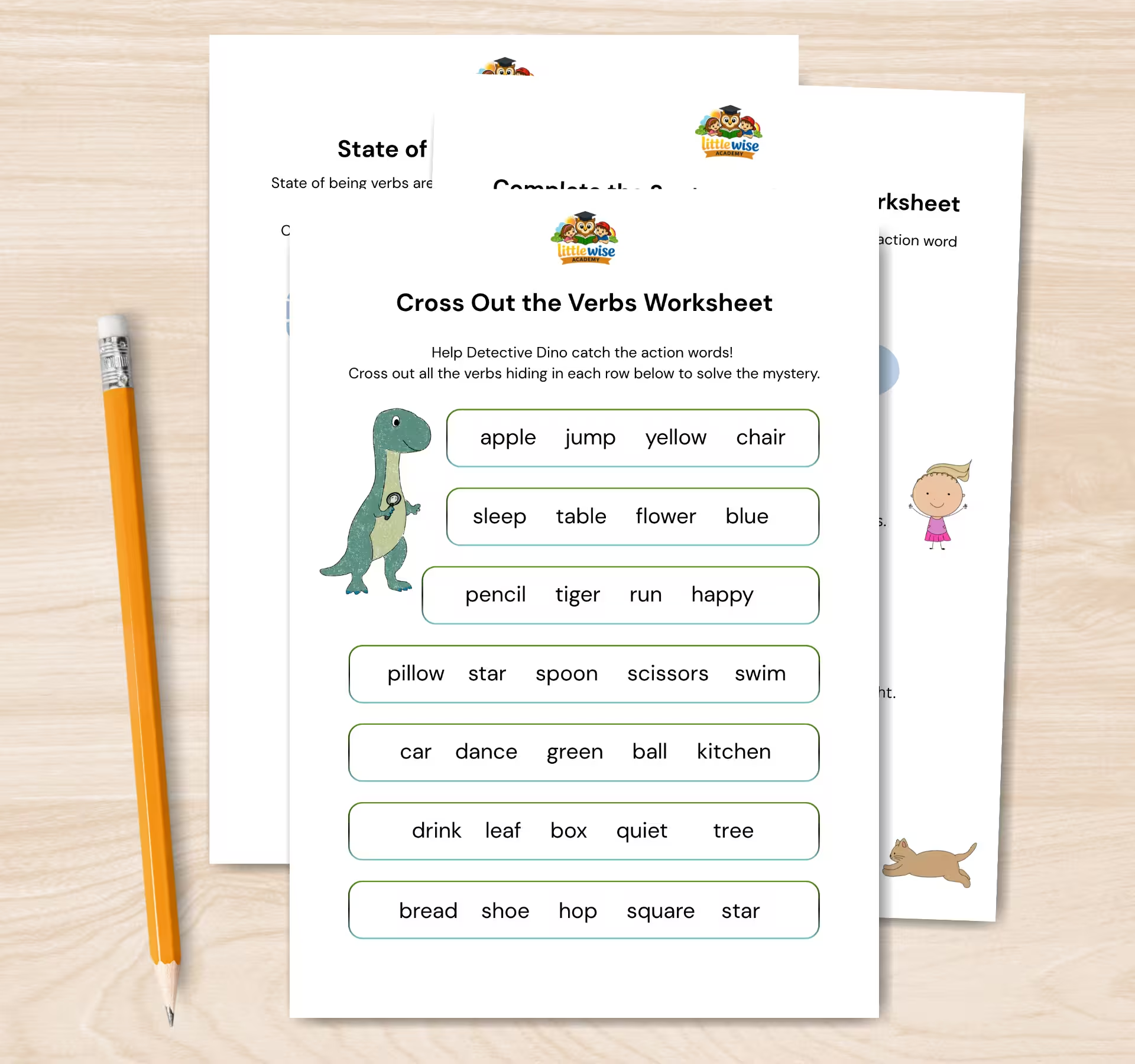
Like any new grammar skill, practice is key. The more children work with verbs, the easier it becomes for them to spot verbs in sentences and understand how they are used.
To give your child different ways to practice, we’ve put together a 3-page verb worksheet with a variety of activities.
You can use the worksheets together as a short grammar lesson or spread them out over several practice sessions.
Verbs may seem like a small part of grammar, but they do a lot of work in our everyday language. Helping your child understand action, linking, and helping verbs, along with basic verb tenses, will strengthen their foundation in reading and writing.
And remember, children don’t have to learn it all in one sitting. Keep things simple, practice a little at a time, and revisit the skills when needed.
Curious about homeschooling? Learn how it works, its benefits and challenges, costs, and how to decide if learning at home is right for your family.

Want to help your child enjoy reading more? Try these easy ways to make story time more interactive, creative, and lovable.
Help kids master capitalization with the M.I.N.T.S. rule, and other essential capitalization rules.
Help your child master nouns with easy explanations of common, proper, concrete, abstract, and other types of nouns, plus everyday examples.

Learn how solids, liquids, and gases are different with simple explanations made for kids. This guide also includes a quick and fun experiment.